Showing posts with label Isle of Wight Virginia. Show all posts

Monday, May 30, 2022

Reflections Concerning Isaac Holleman, Part 3

by Glenn N. Holliman

This continues the saga of Isaac Holleman, born in 1818 into slavery at the Josiah Holleman plantation in Mill Swamp, Isle of Wight County, Virginia.  This time line prepared by Susan G. White, direct descendant of Josiah and major historian of the life and times of Isaac Holleman and his wives.  The words in italics are mine, reflecting on the confusion of the Civil War era.- GNH


A picket fence stands before the current house at Stawberry Plains, the original Urquhart plantation in Isle of Wight County, Virginia.

1848    Josiah Holleman died.  Isaac Holleman sold back into slavery for $355 by executor Isaac Cofer, to Richard A. Urquhart, a wealthy slave owner who lived at Strawberry Plains, about 6 miles from Josiah’s home.

            Malinda Pretlow’s father, Moses Pretlow, is on a list of Josiah Holleman’s debts, in Josiah’s handwriting, of being owed $2.76.  Malinda was the mother of Isaac's first three children.

           Moses and Malinda were free; Isaac was enslaved.  The nuances of Virginia society in the antebellum South are fascinating and puncture the 'Gone with the Wind' concept of a static society.  Free African-Americans lived side by side with enslaved persons and European-Americans, some slave owners, others yeoman farmers working the land with family members or hired hands.  

1850       One black male slave, age 30, Richard Urquhart’s slave schedule (believed to Isaac)

1852       Birth of Isaac’s son Robert Holleman, to mother Malinda Pretlow

1854       Birth of daughter Ada, to mother Malinda Pretlow

1858       Birth of son Moses to mother Malinda Pretlow

1860       Richard Urquhart dead.  His widow continued to own slaves.  Census schedule shows 133 slaves, of whom 2 males are ages 45 and 40.  Isaac would be 42 by then.  He would know the domestic slave quarters still standing on Strawberry Plains Farm.

            Census records reveal that Stawberry Plains was the second largest community of enslaved persons in Isle of Wight County prior to the Civil War.  Enslaved plantations of this magnitude were the exception in American slavery.  One can scarcely imagine the sub-cultures within a population of this size.

                Free Negro Malinda Pretlow is listed on the 1860 census, shown a few dwellings down from R. Pretlow.  She lived on Proctor’s Bridge Road, in Southampton County, west of Proctor’s Bridge.

           During the Civil War, Fortress Monroe located on the north side of the James River, some miles east of Isle of Wight County, became a haven for 'contrabands', former enslaved persons who escaped to the freedom of the Union Army.  One of these persons was Isaac.  There is a mystery here because his three children of Malinda Pretlow, all born free, either went with him or joined him at Fortress Monroe.  At some point in the Civil War, Malinda, who lived long after the war, and Isaac separated.  Isaac must have met Ann Gray during the confusion of this turbulent period and made her his second wife while at Fortress Monroe.


1866       Freedman’s Bureau records show Isaac petitioning for money October 1866 to return home to Nansemond County, along with Ann Gray Holleman, Robert, Ada, and Moses Holleman, to “escape destitution.”  He also petitions for money due his son Robert for work son did for Mrs. Binford, who lived just west of Proctor’s Bridge in Southampton County.

            Nonnie Holliman and Sandi Royal, descendents of Isaac and Ann Gray at the Stawberry Plains farm March 2022 where their ancestor worked and from which he escaped to freedom during the Civil War.                                                               

 1867       Birth of daughter Luzerne.  Mother is Ann (Gray) Holleman

 1870       Malinda Pretlow listed on Southampton County 1870 census.

1871       January 1.  Isaac and Ann buy farm from Nathaniel P. Phillips, made payment of $50.  Farm previously owned by Cary Eley. This farm located a few miles south of Windsor.

1873       November 11.  Isaac pays remainder of farm money, 194.01, to Phillips’ executor, John R. Kilby, and receives deed to the 50-acre farm.

1876       Birth of son Nonnie

1878       Birth of son Jeremiah

1879       Birth of son Joshua

1880       Isaac, Ann, and children on census

Census farm schedule identified Isaac’s farm and its assets

1881       Birth of son Joseph, who died in infancy, about age 1 yr

1883       Birth of son Joshua

1885       Birth of son John Henry, Sr.

1888       Birth of daughter Joanna

1889       Dec. 23 document of Isaac and Ann paying $50 to trustee George T. Atkins, presumably for a debt to neighbor Richard F. Eley.  Debt was satisfied.

1890       U. S.  census burned.  No records.

1897       Last time Isaac paid taxes on farm.

1898       Farm then in name of “Holleman, Isaac, estate”.

1900       Wife Ann on census, with children living with her.  She owned her own home/farm. The date of her death is unknown.  Both Isaac and Ann are buried on the farm, now in unmarked graves.  The property has been part of the Norfolk Southern Railroad since the 1950s.

So here we have the incrediable, tragic, heroic story of Isaac Holleman who born a slave, freed, taken back into bondage, escaped to freedom, became a land owner during Reconstruction, raised children from two wives and whose descendents today are scattered across the USA.   

Abraham Lincoln in his Gettysburg Address spoke of a 'new birth of freedom' in America.  Isaac perservered in conditions and circumstances unimaginable today.  He bears the name Holleman.  And all, descendants and those of the same surname, salute him for his courage and steadfastness in adversity.  - GNH


Tuesday, January 25, 2022

The Saga of Isaac and Ann Gray Holleman, Part 2


Susan White, major Hollyman family researcher, continues the amazing story of the biracial couple, Isaac Holleman, enslaved to Josiah Holleman, and Ann Gray, a White girl, who became Isaac's second wife during the American Civil War. - Glenn N. Holliman

We know from the date of Isaac Holleman’s emancipation in 1836 that he was born in 1818.  He was likely one of the 4 black male slaves under 14 on the 1820 census listing for Josiah Holleman, plantation owner of the original Hollyman land dating from 1684.  Isaac continued to live on Josiah’s land, showing up on the 1830 census as one of 3 black male slaves age 10-23.  He would have been 12.  

Josiah petitioned the Isle of Wight Court on April 4, 1836, for Isaac’s freedom, and it was granted.  We do not know why Josiah chose to free him and can only speculate.  This fact is even more confounding on the 1840 census, where Josiah’s listing of slaves shows a free black male age 10-23 who would be Isaac, age 22, and a free black female, under age 10.  Six slaves of Josiah’s are also listed on this census, 3 males and 3 females.


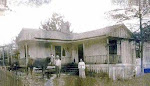
Above, the Holleman House in Isle of Wight County, Virginia.  The house still sits on farmland in the Mill Swamp district purchased by English immigrant Christopher Hollyman (1618-1691). This home was built in the 1830s.  This picture is from 1907, forty-two years after the 13th Amendment to the Constitution freeing the slaves.  Isaac would have known this home and most probably helped construct it.

Josiah wrote his will in 1847, leaving named slaves, including Isaac, to his executor, Isaac Cofer.  No mention is made of Isaac’s emancipation in the will.  

Unfortunately, Josiah’s estate did not contain enough money to satisfy its debt, and sale of Isaac is listed in the estate auction to raise funds. Isaac’s sale added $355 to Josiah Holleman’s estate. Research indicates Josiah (1771-1848) had been suffering from what we now call dementia and that could have contributed to his inadequate financial situation.

Isaaq was bought by nearby neighbor Richard Urquehart. a particularly wealthy man in the county, living on his plantation, Strawberry Plains, with 88 slaves listed on his 1850 census. 


This 1864 map is not easy to read.  It is of Isle of Wight County, Virginia with the borders of Surrey County in the top left and Southampton County, lower right.  The Holleman plantation is center top, diagramed in color with the words 'Mill Swamp' just to the right.  The Richard Urquhart home is south of the Holleman home, and is named for “Widow Urquhart.”   If one looks closely one will see three farms owned by Grays.  Susan and Denise Keeter Goff’s research is that Ann Gray did not belong to one of these families.

Richard died in 1857, and his widow Mary continued to manage the plantation.  “Widow Urquehart,” as she is referred to on the 1864 map of the county, owned 113 slaves on the 1860 census, an amazing number indicating immense wealth.  Three Black males, age 40, are listed on the 1860 slave schedule for her.  One of these is most likely Isaac; he would have been 42 in that year.

Josiah Holleman’s land was in the northwest corner of Isle of Wight County, near where Surry and Southampton counties meet with Isle of Wight.  Free Negroes lived in these counties, and one Moses Pretlow, lived in Surry County, just north over the Surry/Isle of Wight line, not far from Josiah’s land.

Moses apprenticed to Henry Callcote in 1833, and married Rhoda by 1820, as shown on the census.  They raised a family of 7 children, Malinda, Riley, Ann, Mary, John, Michael, and Major.   Moses continued a Free Black, appearing with his family, also free, on census listings from 1820-1850.  Moses farmed his own land in Surry County.   

Moses’ story is important to Isaac’s story because not only he, but also his children were free.  We would have had much difficulty tracing Moses had he been enslaved.  His oldest daughter, Malinda, appears in Isaac’s story beginning in the 1860 census, with 5 other people, Virginia Pretlow, 22, Robert, 11, Ada, 8, Moses, 6, and baby Isaac, age 2 months, all with surname Pretlow.  We don’t know who Virginia is, but based on Freedman’s Records of 1865, Isaac had 3 children then, Robert, 15, Ada, 11, and Moses, 7.  Baby Isaac remains a mystery.  Malinda and her family moved from Surry County to the east side of the Nottoway River, in Southampton County by 1860. 

Interestingly, a White Pretlow family, Robert and Roanna Pretlow, with son Charles, lived along the same road as she, 3 households apart, and the family in between was Moses’ widow, Rhoda, with her still at-home children.  The white Pretlow family pops up again in later years.  The last known location of Malinda is in the 1870 census, listed with surname Holleman. She was Isaac Holleman’s first wife, and continued to live in Southampton County.  A young woman Levinia lived with her, along with 3 black males, Dawson, Hilliard, and Thomas Holleman.  Their relationship to Malinda is unknown.

The Pretlow House from a Historical Structural Survey of Southampton County, Virginia with commentary below.


A house built by Charles Pretlow, was described in a 2008 survey of Southampton County homes, and we include it here to illustrate the neighborhood our characters knew.  “The Charles Pretlow Farmhouse at 37165 Pretlow Drive, is a good example of the vernacular Victorian styles. A frame, two-story, five-bay, central hallway building with interior gable-end chimneys; the house is one-room deep and has a rear one-story kitchen ell. This dwelling has a shallow gable roof with a box cornice with partial returns and decorative brackets. The front entrance porch is supported by paired square wood posts with a cutout star decoration on each side, filigree trim, and scroll brackets. The style (of the Charles Pretlow House) most often observed in Southampton County is vernacular Victorian (referred to as “folk”). Adapted into existing traditional building styles such as the I-house (two-story, one-room deep, central hallway) plan, one or two-story gable-front with side-wing (L-shaped) dwellings, pyramidal hipped with recessed porch, plus front or side-gabled structures, vernacular Victorian was common during the period from about 1870 until about 1910. 

 The Victorian features added to these folk buildings are usually Italianate or Queen Anne inspired decoration, which are typically less elaborate than the high style Victorian interpretations. Typical features might be a full return cornice with brackets under the eaves and/or spindle work porch detailing.”

In a third article, the saga of Isaac and Ann Gray Holleman will continue.  Information on the Holleman House and its history can be found in earlier blogs.  An archive of Hollyman (many spellings) and associated families can be found at www.bholliman.com.

The American Hollyman families are featured also in Hollyman Family at Ancestry.com managed by Jeanette Holiman Stewart who has information on over 70,000 family members!

Tina Peddie, long time Hollyman genealogist, maintains the Hollyman Family Facebook page. - GNH


Friday, December 31, 2021

The Saga of Isaac and Ann Gray Holleman of Isle of Wight, Part 1

by Susan Gallier White

Susan G. White of Virginia is one of the more scholarly writers of  Holleman/Holliman family history of our generation. What follows is the first article of several of the latest information into the fascinating story of an unlikely 19th Century couple, Isaac and Ann Gray Holleman of Isle of Wight County, Virginia. 

In her research, Susan had consultations with Nonnie Holliman and Sandi Royal, who descend from Isaac and Ann, and Troy Jenkins who descends from Isaac's first wife, Malinda Pretlow.  At this site, earlier articles on Isaac and Ann Holleman were published in September 2012 and May/June 2013 by yours truly.  Mrs. White's work greatly enlarges our knowledge of this American story.

Susan wrote August 2016 at this site of her ‘ahead of their time’ Holleman and Faison ancestral grandmothers.  Susan also attended the Spring 2016 Holliman/Holleman in Isle of Wight and later the Spring 2019 Hollyman ancestral exploration in England. - Glenn N. Holliman


Above, Susan and I converse at our opening session of the May 2019 Hollyman gathering in Moreton in Marsh, England.  Back right is cousin Lindsay Holliman, descended as were all Hollimans present, from 15th Century Cuddington, Buckinghamshire, England.  Lindsay lives in Edenborough, Scotland.

Isaac Holleman, a Black man, owned by Josiah Holleman, was born into slavery in 1818 at Mill Swamp district, Isle of Wight County, Virginia.  Emancipated in 1836, he was enslaved again in 1848 to Richard Urquehart, to help pay Josiah Holleman’s estate debts. 

During the Civil War, he fled with his family, including his White wife Ann Gray to Fortress Monroe, Virginia when it was commanded by Union General Benjamin Butler.  Butler, a career Massachusetts politician, regarded Black runaway slaves as contraband, and refused to return them to their owners.  Contrabands by the tens of thousands experienced freedom wherever Union Armies marched.  

One such family was named Holleman.

The 1830s Holleman house is on the original land purchased in 1684 at Mill Swamp, Isle of Wight County, Virginia by Christopher Hollyman, (1618-1691) founder of most of the Hollimans (various spellings) in the United States. This picture taken in 2016 as Hollemans/Hollimans/etc. gathered from all over the country.  The home is owned by Billy Joe Holleman.

After the war, Isaac requested and was granted transportation for himself and his family to Nansemond County, Virginia, in October 1865. He settled in Isle of Wight County, bought a farm of 35 acres, where he lived with his second wife, Ann Gray.  Isaac’s date of death is unknown. His story is only recently discovered by White Holleman descendants but has been in the oral history of his Black family handed down by generations.

 Freed persons with Union Soldiers at Fortress Monroe during the Civil War.

The distance between Mill Swamp Road, Isle of Wight, Virginia, and Fortress Monroe, Virginia is about 36 miles.  The elapse of time between 1619, when slaves were first brought to Jamestown, Virginia and 1818, when slave Isaac Holleman was born, is almost 200 years.

Holleman ancestors were part of that distance and time span beginning in May 1650, when Christopher Hollyman came to Isle of Wight County, Virginia from Bedfordshire, England.  

Thirty-four years later, at age 66, Christopher patented 1020 acres of land in the Mill Swamp area.  The son of an inn keeper and shoemaker, Mr. Holleman undoubtedly succeeded beyond his wildest dreams.  He died at age 73 and divided his plantation which bordered Surrey County among his four sons. Tobacco barns were recorded in his will but no slaves. 

The slave economy grew slowly in the 1600s, but exports of Africans in bondage exploded in 18th Century Virginia.  It was in the 1700s when most likely the ancestors of Isaac arrived in Virginia.  This tragic plantation economy ironically supported many founders of the new United States – for example, Patrick Henry, Thomas Jefferson, George Washington, James Madison and James Monroe.

Fortress Monroe, Hampton Roads, Virginia in the 19th Century where Confederate President Jefferson Davis was imprisoned in chains after the Civil War.  The Isaac Hollemans at the same fort experienced the opposite – freedom!

Four generations after Christopher’s death, one of his second great grandsons, Josiah Holleman, lived on the patented land, in the northwest corner of Isle of Wight, near Mill Swamp.  

Reflecting the growth of human bondage as a norm, Josiah owned 9 slaves on the 1810 Isle of Wight census; no other information listed.  One year later, he bought Negro woman Harty and Negro girl Levinia in a complicated 3-way transaction.

For decades, the plantation economy built on slavery at Mill Swamp prospered, but eventually farming practices at the time depleted Virginia soil and led to economic destress such as experienced when Josiah Holleman died in debt in 1840s.  This situation would affect the future of Isaac. - Susan G. White

Part II of the Saga of Isaac and Ann Gray Holleman by Susan G. White follows in our next blog.  


Wednesday, June 19, 2019

The Hollyman English Ancestry Quest 2019, Part 4


by Glenn N. Holliman

Our Second Stop – St. Mary’s Parish,
Now the Albion Archaeology Centre

Bedford, Bedfordshire
May 18, 2019

Thomas Hollyman, most likely born in the early 1580s, grew up in a wealthy home in Sherington, Buckinghamshire, some 10 or so miles from his adult home of Bedford.  The second son (of a third son), he inherited 40 pounds but no land, when his father died in 1589.  His parents were Christopher and Margaret Lee Hollyman of families from Cuddington and Dinton, Buckinghamshire.


Did his inheritance eventually fund an apprenticeship in Bedford?  We know from Anne Holmes’ research that Thomas worked as a cordwainer or leather maker before he took a lease-hold on the Blue Boar Inn, on Cauldwell Street, several hundred yards to the west of St. Mary’s Church.  Later his son-in-law, Barnabas Crash, seems to have gone into business with him.

As a cordwainer, he must have fashioned shoes, leather garments and harnesses for horses.   Undoubtedly his second son, Christopher, was exposed to this occupation, and perhaps supported himself as a leather worker when he arrived in Jamestown, Virginia in 1650. 

Below, Elisabeth Krueger Ahrens and her mother, Anne Holliman Krueger, daughter of Walter O. Holliman (1927-2003) who did so much to research and capture the stories of the Holliman and allied families in the USA.  Both Elisabeth and Anne are international teachers.

The files in this photograph's background are of archaeological investigations in the Bedfordshire area, research often required before new construction in the United Kingdom.  This picture was taken in the interior of St. Mary's Parish which held its last service in 1975 and in 1991 became a research centre.  


Did Thomas curse his fate? 

The nephews and nieces of his mother, Margaret Lee Hollyman, were on the rise socially and financially.  Margaret’s brother, one Thomas Lee, married Eleanor Hampden who inherited Hartwell House, now a National Trust property which I will write about later.  

The Lees were rising and the Hollymans declining. Thomas Lee died a knight in 1626.  Our Thomas Hollyman, Lee's nephew, mended shoes and served ale at a Bedford Inn.  

One can imagine the envy felt by Thomas.  Unlike he, one of his sisters, Ursala, inherited well from her grandmother of the same name, Ursala Yates Lee.


 Above, Anne Holmes inside St. Mary’s Church, now an archaeological office, discussing the history of the building while the Albion manager, center, looks on as does Jim Holliman, right, of Alabama. 

Did his mother Margaret help support Thomas and get him started as an inn keeper in Bedford?  We do not know.

What impact did the English Civil War, which began in 1642 and did not end until 1652, have on the family?  Did our Christopher (1618-1691) serve in the Parliamentary forces which were supported by the Hampden family? 

Bedford citizenry were generally pro-Parliament and Anti-Royalist.  Young John Bunyan, a Bedford resident, and later a charismatic preacher and author of ‘Pilgrims Progress’, served in the Cromwellian forces. Christopher’s younger brother, Steve, later associated with Bunyan's Meeting House services.

Or did Christopher join the King’s army? 

We know the priest at St. Mary’s, Dr. Giles Thorne, from 1630 to 1671, was arrested by Parliament and jailed for four years in 1640s.  This royalist was accused of ill vices such as maypole dancing and praying for the King!  St. Mary’s was the Hollyman family’s parish.  

Also Christopher’s grandfather, an earlier Christopher Hollyman (d 1589) served as a member of Queen Elizabeth’s Guard, an elite royalist honor probably obtained through Lee family connections.

The interior of St. Mary's in 1851, now lined with files and books, but the monuments and stained glass windows remain.

What we do know is our Christopher along with his spinster sister, Judith, left Bedford in early 1650 and arrived in Virginia in May 1650.  Did they flee the chaos of civil war?  Had Christopher fought on the losing side, as King Charles I was beheaded in January 1649? Had his father, Thomas, died and why leave an elderly mother (age 60 or so) to cross the ocean?

The Birth and Grave Sites of Christopher Hollyman, 1618-1691, have now been Visited by Descendants

In April 2016 at the Hollyman gathering in Isle of Wight, Virginia, Billy Joe Holleman, owner of some of the original plantation of Christopher (d 1691) took our group to what is believed to be the original burial plot of the Hollymans of Virginia.  There we assembled and asked ourselves, is this the final resting spot of the immigrant who left England in 1650 and with his sister Judith braved the Atlantic and settled in the New World founding our American family?

Below Susan White, center, in April 2016 with Holleman cousins at the possible grave of Christopher Hollyman (1618-1691) in Isle of Wight, Virginia.  This site, cleared for us by Billy Joe Holleman, is part of the original plantation of Christopher.


 And below three years later, the same Susan White, left, talking with Dr. Jim Holliman, Di Holliman (back to camera) and Tony Pryce, English friend and guide at the burial site of Thomas and Helena Hollyman, Christopher Hollyman’s parents, and one block from where Christopher was born in 1618 in Bedford, Bedfordshire.


 This picture, taken in May 2019, represents an odyssey of discovery taken full circle from the birthplace in England to grave site in Virginia of the ancestor who dared to come to America and founded our family in the New World.


Next blog, a lunch break at the historic Swan Hotel in Bedford.


Thursday, April 28, 2016

Christopher Hollyman's Plantation - 332 Years On

by Glenn N. Holliman

Cousin Joe Barlow, whose mother Gladys Holleman Barlow was born at the 1830 Holleman House on the site of Christopher Hollyman's 1684 plantation, kindly has sent me this clipping from the April 13, 2016 edition of the Smithfield Times.  His sister, Sarah Barlow Wright shares information on the home.

Christopher Hollyman (1618-1691) first settled along the Cypress River in Isle of Wight County, Virginia in 1661 according to early deeds.  As an older man of age 66, he patented the 1,020 acres along Mill Swamp bordering Surrey County and built a home and tobacco barns.  He left the land and improvements to his four sons.


Below a photograph of Gladys Holleman Barlow and her 1996 obituary sharing information on her life in Isle of Wight County, Virginia.  Picture and obituary courtesy of the Barlow family.


For additional information on the Holleman House, Gladys Holleman Barlow and Isle of Wight Hollemans, please review my postings of autumn of 2013.  

Again our thanks to Billy Joe Holleman, his wife and son and all the Barlows for their many kindnesses during the early April 2016 Gathering of Hollymans from all over the United States.


Saturday, December 5, 2015

Texas Cousins

by Glenn N. Holliman

A Gathering in Texas....

This past weekend while attending a nephew's wedding, I took time out to share lunch Lynn Fusinato and two other distant cousins and old friends, Lynn Holliman and Joseph Parker.

Lynn Holliman and Joe had attended Holliman gatherings in Alabama, and Lynn F. plans to join the clan at the Smithfield, Virginia event next spring.  (See announcement at close of this article)

What do committed family historians discuss when they get together?  Why, they share their lineages and try to connect dots!  Below,  Left to right, Joe Parker, Lynn Holliman, Glenn Holliman and Lynn Fusinato.


Lynn F., our host for the day, hails from Hollimans in Wake County, North Carolina.  Lynn H. traces his lineage back to James Granton Holliman, sharing the same with me.  Joe's line moved from Virginia to Kentucky and Indiana before eventually settling in the Lone Star state.  My own families left Virginia and stopped in North Carolina and South Carolina before settling in Alabama in 1836, my native state.

Lynn F. is careful, thoughtful and well organized in compiling her tree.  Lynn H., a retired investigator has made it his multi-year mission to explore the comings and goings of one David Holliman, a brother of James Grantson Holliman, who eventually settled in Georgia.  Joe is a human computer.  Just mention a Holliman name (various spellings) and out comes data!

We discussed the forthcoming Virginia meeting, and agreed we need to allot time for all to share their lineages and then break into table discussions for those interested in particular branches.  Health permitting, we four plan to be present.  COME JOIN US IN ISLE OF WIGHT COUNTY, VIRGINIA - MARCH 31 - APRIL 2, 2015!


THE CHRISTOPHER HOLLYMAN, SR.
 HISTORICAL SOCIETY
CORDIALLY INVITE YOU
to
The Inaugural Meeting of the Society
at
SMITHFIELD
ISLE OF WIGHT COUNTY
VIRGINIA

MARCH 31- APRIL 2, 2016
FOR

A ONCE IN A LIFETIME TOUR TO THE CHRISTOPHER HOLLYMAN'S PLANTATION CA 1682
AND
OTHER HISTORIC HOLLYMAN SITES
AND
TWO DAYS OF SEMINARS
and Round Table Discussions
ON
THE HOLLYMANS of ENGLAND
AND
SUBSEQUENT MIGRATIONS
THROUGH OUT THE USA

PLUS

SESSIONS ON HOW TO TRACE YOUR HOLLYMAN DNA, THE MASSIVE FAMILY TREE (at www.Ancestry.com), HOLLYMAN WEB SITES, THE JAMESTOWN SOCIETY AND THE NEW HOLLIMAN ARCHIVES FOR HOLLYMANS (ALL SPELLINGS) AND ASSOCIATED FAMILIES!

 In my time with Lynn F., I discovered her grandfather and my grandfather both lived in west Alabama at the same time, early in the 20th Century.

If you trace your ancestry to Christopher Hollyman, Sr. (1618-1691) you will not want to miss this national gathering of his descendants in the ancestral home of almost all North American Hollemans, Hollimans (and various spellings). 


Our Registration Center and Gathering Place for Seminars and Dinners will be the Smithfield Inn, 112 Main Street, Smithfield, VA (757-357-1732).


As the Smithfield Inn is sold out for lodging, a special rate has been secured at the near-bye Hampton Inn.  Guests may book individual reservations under the name of Holliman Family Reunion.  One may call the hotel direct at 757-365-4760 or go to www.smithfieldsuitesva.hamptoninn.com.


·       Enter the dates ranging from March 31-April 2, 2016.
·       Click on Add Special Rate Code and enter the Group Code (HFR).
·       Click on Check Rooms and Rates.

Guests will be able to select their room type and proceed to make their own reservation using a credit card to guarantee their room.

The rates are as follows:
·       Standard King room at $109.00 plus tax.

The cut-off date is March 1, 2016 for this special rate.

The program begins with a Meet and Greet, Thursday, March 31, 5 pm - 6:30 pm, Smithfield Inn followed by order-from-the-menu dinner.  Sessions and field trips held and/or originated at the Smithfield Inn on Friday and Saturday, April 1 and 2, 2016.  Please call your lodging choice directly BUT let us know if you plan to attend as space is limited. Location could be moved subject to enrollment. 

The Holleman House and Smithfield are located approximately 1 hour from Jamestown (by ferry across the James River) where Christopher and his sister, Judith Hollyman landed after their long and weary sailing from England, May 1650!  Williamsburg and Yorktown are near Jamestown.


Left, Joe, one of the most informed of all Holliman  genealogists, listens as Lynn H. shares his latest findings on 18th Century Hollimans from North Carolina and Georgia.   


                                                                           Agenda
              for the Christopher Hollyman, Sr. History Society
             March 31-April 2, 2016

March 31, 2016

5 pm – 6:30 pm registration, meet and greet, Smithfield Inn, Smithfield, VA

6:30 – 8:30  pm – Dinner, Welcome, Announcements, Group Photo and Review of the Agenda  (order from the menu)

Distribution of Materials: “The Hollymans from England to Virginia and Beyond”

April 1, 2016

9 am – Noon

"Getting to Know You" - Share your lineage with the group and what do you wish to learn?"
"Where to Find your Cousins - Facebook, the Yahoo Group, The Hollyman Family Tree, the Holliman Virtual Archive and the Jamestown Society”

As time permits - “England to Virginia” and "The Virginia Experience"

 Noon – Lunch on your own at one of Smithfield's many dining venues

1:30 pm – Visit to Isle of Wight Museum (across from the Smithfield Inn)

2:30 – Field Trip 1830 Holleman House at Christopher Hollyman 1682  Plantation including loop tour of Smithfield Hams and Ivy Hill Cemetery. Group photo at Holleman House! Optional extended 30 minute visit to possible site of Christopher Hollyman’s grave (Wear old clothes and shoes as old burial place in woods)

5 pm – Return to Smithfield and Dinner on your own

7:30 pm Business Meeting of Christopher Hollyman, Sr. Historical Society Executive Committee; open to all


If you will come to Virginia this spring, cousin Allen Holleman will share some of his Isle of Wight peanuts with you!  Ahem, you may have to buy your own beverage.

April 2, 2016

9 am –  Noon

Break Out Sessions  on Topics that interest You! – Whether more information on DNA, Ancestry.com, your lineage or problems in tracing your family, Hollyman genealogists will be prepared to lead discussions on ancestors and issues.  Floating round table discussions available .

11 am – Sixth and closing Session – ‘Creating Structure for the Christopher Hollyman, Sr. History Society”

Noon – Close of Hollyman Seminar – Participants encouraged to visit Jamestown on their own, site of Christopher and Judith Hollymans 1650 arrival in the New World!

And don't miss Williamsburg, founded in the 1690s, a marvelous Colonial towne preserved and celebrated.


PLEASE JOIN YOUR COUSINS IN OLD VIRGINIA NEXT SPRING!