Showing posts with label Ezekiel Holliman. Show all posts

Tuesday, October 20, 2020

Connecting the Hollyman Lineages, Part 2

 by Glenn N. Holliman

This is the second in a series of articles by professional genealogist Anne Holmes of Buckinghamshire, England.  In this blog she seeks chiefly to discover kinship ties between Hollymans living in London of the 16th and 17th centuries with the Hollymans who lived in Cuddington, Buckinghamshire.  Cuddington which lies east of London, south of Aylesbury, is an ancestral home of most Hollymans (various spellings) who reside in the United States. 

This research is also valuable to the descendants of Hollymans who departed from London in the 19th Century for New Zealand, Australia, other parts of the British Empire and of course, those who remain in the United Kingdom. - GNH

Part 2 by Anne Holmes

Rather than going backwards in time, one approach to solve some of the London HOLLYMAN lineage challenges is to look at the male HOLLYMANS present in London in the 17th Century and earlier and then to work through possible male descendants, looking for further clues.  From past research, for example, it is known that some Cuddington HOLLYMANS did move to London.


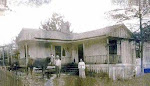
Above Hollymans (various spellings) in Cuddington in front of the late 1600s thatch cottage at the Hollyman farm, May 2019.  Fortunately this sojourn to our native land occurred ten months before the Pandemic of 2020.

John, a son of Thomas HOLYMAN of Cuddington, Buckinghamshire (d1558) lived in London. John died there in 1578, unmarried and therefore no descendants. His nephew John, son of Christopher HOLYMAN his brother, was a beneficiary of this John’s Will.

Note both these Thomas and Christopher Holymans of Cuddington are direct great grand fathers of the American Hollymans.  This Christopher Holyman married Margaret Lee of Dinton, and they lived most of their lives in Sherington, Buckinghamshire.  They are the grandparents of the Christopher Hollyman who migrated from Bedford, Bedfordshire in 1650 to Virginia. - GNH

Another son of Thomas HOLYMAN, Richard, also died in London 1603. Richard can be found liable for tax in Middlesex in the 1590s where previously he had been liable for tax in the Hundred of Aylesbury in Buckinghamshire. This Richard HOLYMAN lived in the parish of St. Giles Cripplegate, London but kept his property interests back in Cuddington. 


Above the Medieval tower of St. Giles, Cripplegate with the Barbican complex in the left background.  The church was largely destroyed by the Blitz in World War II, and damaged in several earlier London fires.  Buried in the church were John Foxe who wrote the Book of Martyrs and John Milton who wrote Paradise Lost.  Oliver Cromwell married here in 1620.  

Below as Richard Holyman of Cuddington and London would have known St. Giles in earlier centuries.


This Richard had two surviving sons, Francis and Thomas. Francis died in Middlesex in 1633 but he too kept his links to Buckinghamshire. Like his father, Francis was liable for tax in 1623/4 in London where previously liability had been Buckinghamshire.  It has been difficult to trace any descendants of Francis’ brother Thomas.

This Francis who died in 1633 had three sons, Richard, Thomas and Simon, alive at the time of his death. Francis’ widow Margaret died after her husband in 1647 in Winslow, Buckinghamshire. At the time her Will was written (1643) only sons Richard and Thomas were surviving but their resident location not given.

 And then there is the Francis HOLLIMAN, Silk Weaver and Thrower who died in the parish of St. Mary’s Whitechapel, Middlesex in 1678. The administration of Francis estate was applied for by his daughter in law Mary, wife of Francis’ deceased son William. William had died in Marhalsea, south of the River Thames, in 1676 leaving behind two children.


Above St. Mary's Whitechapel in the Middlesex district of London, 
located approximately 3 miles east of Charing Cross. 

In 1666, the Hearth Tax for St. Mary’s Whitechapel lists a Francis HOLLYMAN as having a house with six hearths (fireplaces) so quite a big house to inherit.

Apparently, Francis had dictated a written Will before he died to an Ann HAWKE bequeathing his estate to the two children of his deceased son William. It looks as though from notes against the administration document (written later in 1693) there was a problem with this bequest. Unfortunately, the genders of Francis two grandchildren are not known as again suitable baptisms not found. 

There is evidence Francis HOLLIMAN, Silk Weaver of St. Mary’s Whitechapel was a nonconformist, a member of the Whitechapel Independent Church, hence the lack of baptismal evidence for his family. It is not impossible this Francis’ ancestry had its origins in Cuddington. - Anne Holmes


It is interesting that Anne's research reveals Hollimans belonged to two churches in London with Non-Conformist ties (i.e. not Anglican or Roman Catholic).  One Holliman known to history as a Non-Conformist is Stephen Holliman of Bedfordshire, a member in the late 1600s of a Bedford parish pastored by John Bunyan, author of Pilgrim's Progress.  Stephen was a brother of Christopher Hollyman, the 1650 immigrant to Jamestown, Virginia.  

The second Non-Conformist would be Ezekiel Holliman, born in Buckinghamshire, who immigrated to New England in the early 1630s and baptized the establisher of the Baptist Church in American, Roger Williams, founder of Rhode Island and advocate of religious freedom.- GNH

More research of Ms. Holmes in our next blog!


Friday, April 12, 2013

When we were English LVI

by Glenn N. Holliman 

Christopher Holyman makes his way in Elizabethan England...

 Sometime in the late 1560s or 1570s, the persons, of which cumulative evidence indicates are my 9th great grandparents, married.  They were Christopher Holyman, a son of Thomas Holyman (d 1558) who died in 1588 in Cuddington, Buckinghamshire, England and Margaret Lee, daughter of Thomas Lee of Dinton, Buckinghamshire.  The Lees were substantial landowners and persons of prominence in Buckinghamshire.  We shall explore this important maternal line in the next post.

According to professional genealogist, Anne Holmes of England, during the mid to late 16th Century the Holymans of Cuddington achieved their highest level of social and economic prominence.  In that era, Elizabeth I securely held the throne, her Sea Dogs such as Francis Drake raided Spanish treasure ships, and the realm settled on a religious compromise between Roman Catholicism and rising Puritanism.  That middle way is known as the Church of England, the Anglican Church if you will.  In the United States, this form of Protestantism is known today as the Episcopal Church.

When Christopher and Judith Holyman (whom I contend were grandchildren of this first Christopher Holyman) arrived in Virginia in 1650, they were Church of England, no longer Roman Catholics as had been their grandfather at his birth. Nor were they non-conformists as was their distant cousin, Ezekiel Holliman, a founder of the American Baptist Church in the Rhode Island plantations. 


English soldiers mustered to repel the expected Spanish invasion in 1588,  As an officer of the Queen's Guard, Christopher Holyman, d 1588, may have rallied with his men.

Thomas Holyman (d 1558) had numerous children and, as we noted in previous posts, according to the laws and customs of the time, the first born son, Richard, inherited the bulk of the estate.  Our Christopher, who may have been a minor when his father died, received only some income from the harvest from one of the numerous lands of Richard. 

Thus, Christopher and his brothers who inherited little had to make their own way in the world, generally through the church or the military, or one could step down the social ladder and become a tradesman.  Alas, one of Christopher and Margaret's sons, one Thomas Holyman (d ca 1650) of Bedfordshire,  inherited very little and became a member of the merchant class in the early 1600s, a story to be explored later. 

Margaret Lee probably bought a substantial dowry into the marriage with Christopher and that no doubt eased his way in life.  We know from several sources he was a prominent person in Sherington, Buckinghamshire, the location where he lived comfortably with his wife and growing numbers of children in the 1580s.

Seeking a career, landless Christopher joined the Army. When and where we do not know, but the year he died in 1588, he was a member of the prestigious Queen's Guard, a company of soldiers who served at the Queen's pleasure.  To give us some idea of the status of this elite group, in the 1590s, a few years after Christopher's death, the famous Sir Walter Raleigh, a favorite of Queen Elizabeth, commanded the Guard.  Raleigh, North Carolina takes its name from this entrepreneur, adventurer and later writer, who attempted to found the doomed Roanoke Colony in the 1580s.
 

Above Elizabeth I, the Armada Portrait celebrating the victory of 1588.
 
The Queen's Guard survives to this day, well known to American tourists who have witnessed the Changing of the Guard in their bright red uniforms and tall bear furred head gear every day at 11 a.m. at Buckingham Palace, London.

 Was Christopher called out during the feared invasion by the Spanish Armada in 1588?  Was he in the field at Kent when Elizabeth marshaled the country's land forces in readiness?  Did our 9th great grandfather hear his Queen forcefully proclaim that she had the feeble body of a woman but the heart of a king (such as her father Henry VIII)?
 

The English fire ships wrought havoc to the Spanish fleet as captured in this painting of the time.
 
Fortunately this gathering of English soldiers was never tested.  At Gravesends, the courageous Sir Francis Drake maneuvered his smaller ships close to the hulking Spanish galleons. He sent fire ships to panic the anchored enemy fleet. Many of the larger, less agile Spanish titans, caught fire and burned.   The panicked Iberian fleet scattered only to be battered by fierce storms that decimated the remainder of the shattered Spanish fleet. King Phillip II of Spain, once Elizabeth's brother-in-law, prayed aloud asking how he, a Catholic king, could have so displeased God?!

The invasion threat receded, the English soldiers returned home, but did our Christopher leave with the germ of a common killer of soldiers, a camp fever?  He died in December 1588, not an old man.
 

Above the parish cemetery in Sherington, England. Photo taken 2011.
 
Is Chris buried in the grave yard in Cuddington, his ancestral home, or in Sherington where he and his wife, Margaret Lee, raised their family of children, one being a young Thomas at the time of his father's death?  We do not know.

 Next Post, Christopher Holyman marries well into prosperous Lee family, wealthy and growing more so!

Have questions about Holliman family history? You are invited to join the Hollyman Email List at Hollyman-Subscribe@yahoogroups.com and the Hollyman Family Facebook Page located on Facebook at "Hollyman Family". Post your questions and perhaps one of the dozens Holyman cousins on the list will have an answer. For more information contact Tina Peddie at desabla1@yahoo.com, the list and Facebook manager for Hollyman (and all our various spellings!).

Since early 2010, I have been publishing research and stories on the broad spectrum of Holliman (Holyman) family history at http://hollimanfamilyhistory.blogspot.com/ . For stories on my more immediate family since the early 20th Century, I have been posting articles since early 2011 at http://ulyssholliman.blogspot.com/ .

Let's save the past for the future! If you have photographs, letters, memorabilia or research you wish to share, please contact me directly at glennhistory@gmail.com. Several of us have an on-going program of scanning and preserving Holyman and related family records. Don't just let family's genealogical work or photographs languish unread and deteriorating in an attic. Write us please and tell us of your items. Thanks to the Internet, we are able to scan, upload to the web (with your permission) and return the materials to you.

Announcing also a "Seminar and Site" gathering October 18 and 19, 2013 in Fayette, Alabama for Hollimans and associated families whose ancestors are from that area.  Space at the Rose House Inn is limited for the occasion due to a football weekend. For information, contact me at the above email.  Hope to see some of you there. - GNH

Tuesday, September 7, 2010

When We Were English, Part XVII

by Glenn N. Holliman

Continuing the Search for John Holyman (1572 - 1650)

Tring, Hertfordshire traces it roots to Anglo-Saxon times, and was located just west of the Danelaw in the 900s. The hamlet is listed in William of Normandy's Doomsday Book. The above is the town logo. (Photo by Barbara Holliman)

I am still looking for that elusive John Holyman who, according to one prominent Holliman genealogical website and the LDS records, was born in Tring, Hertfordshire in 1572. John is the widely reported father of Christopher Holliman, Sr., who is our ancestor of solid record.

We do know a John Holyman did die in Southampton, Virginia in 1650 and left a will which devolved property to a friend, not family. For the past few months, I have been posting information found during an excursion to England seeking Holyman roots and our reported very great grandfather. I continue.

As readers of this web log know, there was a Bishop John Holyman (1495-1558) and an Ezekiel Holyman (1586 - 1659), both religious leaders. One was Roman Catholic and the other a Baptist Protestant. The evidence supports that they are related.

Cousin Jennette Stewart shared by email information that in the English Origins of New England Families, Vol. III, pages 193 - 195, one will find an article by G. Andrews Moriarty entitled 'The Holymans'. In this article Moriarty quotes The Register, an English genealogical publication, that the Holymans were a family of 'substantial yeomen' with branches in Cuddington, Cholesbury and Chesham. The Rt. Rev. John Holyman, Bishop of Bristol from 1554 to 1558 was a member of this family as was one Jayne Holyman (1552 - 1632) and her nephew, Ezekiel Holyman.

From the Latter Day Saints genealogical website, we have the following:

One Leonard Holyman (1520 - 1573) was born in Cholesbury and died in Tring. From the above source we know that Leonard is related to the Cuddington Holymans. I refer all to my post of August 23, 2010, 'When We Were England, Part XV'. Leonard is a contemporary of Bishop John Holyman. Were they brothers or cousins? Cuddington, as the earlier map notes, is an hour or two by horse from Tring and Cholesbury.

Leonard married a Joan (b 1525) also of Cholesbury. They had at least seven children. One was the Jane (Jayne), referred to above, b 1552 in Tring, Cholesbury, died 1636 and is buried in Chesham (near Cholesbury). She married Richard Weedon, as noted in the last posting. One of their sons, James, immigrated to Rhode Island, as did Jayne's nephew, Ezekiel.

Jayne's brother John Holyman (1548 - 1597) was a weaver and had a wife named Ales (Alice). There were a number of children of this marriage, one being Ezekiel Holyman, who would immigrate to New England and help found the Baptist Church in America. Another child, Elsabeth, married into the Weedon family herself.

Two of Leonard's sons, Edward and William, left wills of which I found and made copies while in the Hertfordshire Archives. I will be publishing these wills later and transcribing what I can. There was a third son, John, whose will is below and lifted from the English Origins of New England Families.

The Will of John Holyman (1548 - 1597)

Now John Holyman (d 1597) left a will (abstract above) which does not list a son named John Holyman (remembering we are looking for a John Holyman, b. 1572 in Tring). John (d 1597) does list a godchild, whom he terms John Child. To this godchild, Holyman left his 'looms and all that belongs to them'. His own children received much less, Ezekiel only getting a ewe. Why did he favor the godchild over his natural children? Perhaps John Child had an aptitude for weaving while the others did not? But this John also left John Child his land after his wife's death.

Why favor John Child over one's own children?

Could John Child have taken the last name Holyman from his godfather, John Holyman? Could this John Child be the elusive John Holyman (d 1650 in Virginia)? The dates work. Could this godchild be a natural offspring of John Holyman (d 1597), given perhaps a last name (Child) to obscure a birth out of wedlock? This is only speculation on my part, but the bequests are odd.

So John Holyman (d 1650) is still hidden in history as far as primary sources are concerned, if he be from the Tring area. As cousins Maxine Wright and Joe Parker have revealed, there is evidence John Holyman (d 1650) may have been from twenty-five to thirty miles north in Bedford. If so, why are so many web sites placing him in Tring?

So are the Bedford and Tring area relatives very closely related, perhaps a branch just recently relocated to Bedford from Tring in the late 1500s? Perhaps, somewhere, someplace, some Holyman stated to an authority, "Yes, my family is originally from Tring, before recently moving to Bedford."

I will look further. Thank you for your patience as I attempt to place all this research by several persons and sources in narrative format and on the record. As ever, I am grateful to my distant cousins for their sharing of knowledge and evidence. Opinions expressed and conclusions drawn, as well as errors, are mine alone.

Next posting....looking at the will of William Holyman, a son of John Holyman (d 1597).

Wednesday, August 25, 2010

When We Were English, Part XVI

by Glenn N. Holliman

Connecting Cuddington Holymans to Cholesbury Holymans and Tring Holymans
Note: Cousin Jeanette Stewart recently shared in a Holliman chat room information on the Holyman and Weedon (Wedon) families of Hertfordshire, England from the English Origins of New England Families. Before reviewing her excellent research, I had been preparing the article below which echoes and strengthens her findings. In future postings, I will attempt to weave her public work into the growing narrative of the Holymans in Tring and Cuddington, England in the 16th and 17th centuries. My thanks to Jeanette, Joe Parker and all for making available to the larger Holliman, Holleman, Hollimon, etc. families their increasing knowledge of our historic roots.

Last spring my cousin Maxine Wright, a relentless researcher in pursuit of Holliman origins, mailed me the following information of one Richard Wedon, who lived in Botley, a small village near Cholesbury and Tring. As one can read in the first paragraph of this p. 187 of The Register, published 1954, Richard had to pay a fine in 1567 for breaking the head on another man's servant. Hmmm....

Richard must have matured because nine years later, in 1576 he married Jayne Holyman in Cholesbury, near Tring. The information below states that this Jayne Holyman was from 'a yeoman family of good standing in Cuddington', descendents of Bishop John Holyman, whose life we have reviewed in previous blogs.

Several other items leap out at us. Richard and Jayne had a son named James who evidently immigrated to Rhode Island! Did James join a cousin named Ezekiel of Tring in Rhode Island?One remembers that Ezekiel Holyman, an Anabaptist, baptised Roger Williams the founder of Rhode Island!

Notice that Richard Wedon writes a will in 1618 (it is probated in 1624, presumably the year of his death). The will is witnessed by William Holyman. Double click to enlarge.

Now the issue grows more complicated. Above we have Jayne Holliman married to Richard Wedon. Below in another section of the Register, we have a John Holyman appearing in marriage in 1593 and dying a few years later. Goodbye to this John who had no children.

However, now William Holyman, the eldest son of another William Holyman, appears again (noticed who witnessed Richard Wedon's will), baptized June 1583 and his sister Priscilla February 1584/5. They have a brother named Ezekiel.

This Ezekiel according to many web sites and those who have researched Baptist Church history is the Ezekiel who sailed to Massachusetts and helped found Rhode Island!


Notice in the next paragraph an Ann Holyman married another Wedon May 1586, and is noted as a probable daughter of Leonard Holyman and a sister of Jane Holyman.

Confusing? Yes, but stay with me. In the next blog, we are going to examine Leonard Holyman and his offspring. In web sites, Leonard is listed as the father of Ezekiel Holyman.

So, two thoughts emerge:

1. Leonard Holyman and other Holymans of Tring and Cholesbury, including Ezekiel, are indeed descendants of Bishop John Holyman of Cuddington.

2. Bishop John Holyman, a devout Roman Catholic, therefore is probably a great or great great uncle or cousin of Ezekiel Holyman, who was religiously antithetical by 180 degrees, to his prominent descendant, an Anabaptist in America! For those interested in religious history this is an amazing journey for a family. One generation burns Protestants at the stake; another helps establish the Baptist Church in Rhode Island.

So are all these interesting Holymans our direct ancestors? Ancestors, most probably yes; direct, we still do not know.

The elusive John Holyman, who died in Virginia in 1650 and is named in various web sites as the father of Christopher Holliman, Sr. (whom we know is the father of the American Hollimans), still has not appeared in the Tring records many of us have researched.

More in the next posting on resolving this mystery. Is our Christopher Sr. really from Bedford, Bedfordshire, another 30 miles or so up the road from Tring? Stayed tuned for more research....

Wednesday, April 28, 2010

Our Family's Colonial Era, Part IV

Mill Swamp and the Church
by Glenn N. Holliman

For the past three weeks, I have described a journey to our family roots in Isle of Wight County, Virginia. Just down the road from the Holleman House is a church that has become part of the family story.


The Mill Swamp Baptist Church, Isle of Wight Co., Virginia has been rebuilt many times in nearly 300 years of existence. The church and cemetery are adjacent to land owned by the Holleman's and Gwaltney's. According to cousin Jeanette Holiman Stewart, from 1798 to 1801 Jesse Holleman, Sr. was joint minister of the church with John Gwaltney. Later Jesse Sr., a direct descendant of Christopher Holliman, Sr. pastored the church alone from 1819-1820 when he was 83 years of age.

The first Hollimans were Anglicans, members of the Church of England. Until the American Revolution, there was only one official church in Virginia, and that was the Anglican or as now styled, the Episcopal Church. Our Virginia ancestors did not come to the New World for religious freedom. They came to better themselves economically, and Christopher Holliman, Sr. succeeded.

There were few Episcopal parishes in colonial days. Only one or two in each shire (as the first Virginia counties were called), and many persons felt something missing spiritually in their lives. Into that religious void came the Baptist Church, which gradually spread out of New England into the Middle Atlantic and Southern colonies by the early 1700s. Presbyterians and Methodists soon followed.


Our cousins and contributors, Ron Holliman and Maxine Wright, have pointed out that one Holliman, Ezekiel of Rhode Island, was a founder of the American Baptist Church. Ezekiel Holliman, from the same part of England as Christopher Holliman, Sr., baptised Roger Williams, the founder of Rhode Island and the Baptist Church in America! More on this probable distant cousin in later posts.

One of the first Baptist churches established in southeast Virginia was located adjacent to Holliman and Gwaltney land. The Mill Swamp Baptist Church, founded 1719, was named after the marshy ground and a stream that ran nearby. This church's location proved perfect for baptisms and became the mother church of many others in the Virginia tidewater region. In the adjacent cemetery are numerous graves of 19th and 20th century Hollemans plus Cofers, Gwaltneys and Atkinsons, all who intermarried in the Holliman family. Photo by Barbara Holliman of Glenn, 2010. A list of those buried in Mill Swamp Baptist Church Cemetery can be found at http://www.iwchs.com/


Yes, there truly is a Mill Swamp near the Blackwater River as noted on the 1684 patent for Christopher Holliman, Sr.


Next week we begin to examine the cash crop, tobacco, which was grown by the Holliman family in the Colonial Era.