


 Posts
Posts


by Glenn N. Holliman
Daffodils tell a Story
On March 12, 2022, a Holleman/Holliman family group, all descended from ancestors of Isle of Wight County, Virginia, finished a late lunch in Windsor, Virginia. It had rained 'cats and dogs' that morning but after the sky had emptied several inches of rain, a nasty, windy cold front moved in, and later a wet snow fell. We were a three, sometimes a four, car convoy visiting Holleman ancestry sites, on a blustery day in late winter.

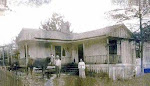
Above, at an earlier stop before lunch near Windsor. Susan White, our leader, shivering in blue, Tammy Hunt, Sandi Royal, Kimberly Holliman and her father Paul Holliman listening to a lecture at a century old country store by Jim Henderson (not visible) of the IOW Historical Society.
Refreshed by a quick meal, our convoy headed east on Old Suffolk Road. The rain eased, although not the wind chill. We turned south on Tyler Road, drove a half mile or so, stopped at the Tyler Cemetery.

Isaac Holleman was our reason for this trip. He had been born a slave into the household of Josiah Holleman of Mill Swamp, IOW, in 1818. His story has intrigued me since I heard it in 2012 from Sandi Royal, a descendant of Isaac.


Isaac's great grandson, Nonnie Holliman, pictured here visiting his grandfather's resting place, was in our group, as well as others who descended from Isaac. Nonnie, retired from Federal service, drove all the way from his home in Syracuse, New York to make this pilgrimage to the town in which he grew up.
The genealogist who had arranged the trip, Susan White, of Richmond, descendent of Josiah, has gathered in the past year a monumental amount of research on Isaac and his two wives, Malinda Pretlow and Ann Gray.
Susan has written the past three blogs on Isaac and his incredible story. She is an often visitor to the Library of Virginia, the Virginia Baptist Historical Society Library, and the archives of IOW county. Those of us studying the Hollyman families in Virginia owe her a great debt of gratitude.
Utilizing her research and that of historian Jim Henderson of IOW Historical Society who also accompanied us, I add my own reflections and tip my hat to both of them.

At the Tyler Cemetery, Kimberly Holliman, Sandi Royal, this writer, Tammy Hunt and Doris Knox
The water table in this part of southeast Virginia is close to the surface hence the concrete tablets to secure the grave sites.
Isaac escaped bondage during to the Civil War and found sanctuary at Fortress Monroe, a Union outpost. There he must have met and married the mysterious Ann Gray. Destitute after the war and with children from his first wife, Malinda, and now children with Ann, somehow he was able to purchase a 50 acre farm in 1871. Susan believes he died there before 1899 and his wife, a few years later. In her research Susan discovered the location of the farm near Tyler Cemetery.
Are this biracial couple buried in Tyler Cemetery? No, that is not their resting place. Nonnie, who had spent time on the farm in childhood (it stayed in the Holleman family until 1954), believes the couple is buried on their farm.
We boarded our automobiles, studied our maps and headed further south along Tyler Road, past the turn off at Dunston Road, and drove a bit further. The farm had been purchased by the railroad and now the land along Tyler was now brush, trees and shrub. We could find no entrance into where we knew from the map that the farm had been located.
And then we spotted the daffodils.

Daffodils are not native to North America. They have to be planted. According to author Kelly Gamey, who photographs and writes of forsaken southern properties, a clump of isolated daffodils in the spring are 'ghost gardens', bulbs buried in previous decades by former inhabitants of abandoned sites. You might check out her site at kelly@theforgottensouth.com.
There were no other daffodils along the road. This had to be the lost entrance to the Isaac and Ann Gray farm. Somewhere in the bush probably lay the foundations of a home and graves. But we were not equipped for an exploratory hike in the marshy woodlands that cold afternoon.
We stopped, took photos, and chilled as we were, called it a day. I rode with Susan, our driver and historian, and Sandi and Nonnie, all of us returning to Richmond. We said goodbye to Tammy and Doris of Southampton County. And also Paul, Teresa and Kimberly Holliman, residents of Williamsburg and alumni of our 2019 Hollyman excursion to England. They ferried across the James River, coming and going to be with us that day.
On the way back it snowed several inches and the temperature kept dropping. But our hearts were warmed by what we had seen and heard that day.
And more on the trip in the next blog as we explore further the life and times of Isaac Holleman.....




.jpg)


