Friday, March 26, 2010

The Confederate Soldier Who Became a Teacher

In this post we focus on another of Mary Polly Holliman's sons, James Franklin, who survived the Civil War and returned home to become a school teacher. Unfortunately for Polly and her remaining children, her husband, Uriah, and two other sons, Charles Daniel and Elijah, died while serving in the Confederate Army. Imagine the heartache and worry of Polly both during and after the devastating war.

Our continued thanks to cousin Rhodes Holliman for his permission to share these amazing stories and photographs of our ancestors.

The photo is James Franklin Holliman in his Confederate uniform, ca. 1863.


A SOUTHERN FARM BOY AND A GALLANT LOVER

by Dr. Rhodes B. Holliman of Dublin, Virginia,
his great great nephew. First published in Southern Times, Magazine of Tuscaloosa and West Alabama, Issue 130.

James Franklin Holliman was the second of 13 children born to Uriah Holliman and Mary Polly Lucas Holliman. She delivered her entire brood by herself, 7 boys and 6 girls. James was born in Tuscaloosa County, Alabama, on January 28th, 1839, but Uriah soon moved the family north into Fayette County, AL, where he obtained Federal homestead land for farming.

When the clouds of War covered the South, a wave of patriotic enthusiasm swept over the family and the father, Uriah, now 46 years old, 4 of his 7 sons, and one son-in-law joined the Confederate Army. The War would exact a heavy toll on this family: of the 6 who enlisted, only 3 would survive.

James enlisted for a year as a private in the 9th Alabama Battalion, Company B, in Fayette, Alabama, in September, 1861. In the following spring, the 9th Battalion proceeded to Corinth, MS, and was engaged at Shiloh and Farmington. At Blackland, MS, the Battalion lost about 20 killed and wounded and disease took its toll at Shiloh, Corinth and Okolona, MS. Among those dying at Okolona was James’ father, Uriah (May 8, 1862), and a brother, Charles Daniel (May 12, 1862).

James reenlisted in the 9th Battalion in September, 1862, as a 1st Lieut., and was sent to Mobile, AL, remaining there until April, 1863. At that time, the Battalion proceeded to Tullahoma, TN, and was placed in Gen. Henry D. Clayton’s Brigade. This set the stage for the carnage that would follow in the area around Chattanooga, TN. The 9th was in several small engagements, especially at Hoover’s Gap. In July, 1863, at Tullahoma, 2 additional companies were attached and the 58th Alabama Infantry Regiment was formed. The 58th was in the thick of the fighting at the Battle of Chickamauga in September 19 - 20. On the 19th, the 58th captured 4 pieces of artillery, and on the 20th, in a suicidal charge, they broke the enemy line with the loss of 148 out of 254 men. A few weeks later in November, the 58th was consolidated with the 32nd Alabama and the field officers of the 58th were retained.

The consolidated Regiment had 400 present at Missionary Ridge on Nov. 25th, 1863, but lost 250 in casualties and prisoners. Lieut. James F. Holliman was captured on November 25th. He was shipped to a military prison in Louisville, KY, and thence to the infamous prison for Confederate officers at Johnson’s Island, Lake Erie, near Sandusky, Ohio. There he remained until he was paroled and took the Oath of Allegiance on June 13th, 1865. He was then described as being 26 years of age, dark completion, dark hair, gray eyes, 5 feet, 9 inches tall.

In our next weblog, we share the second half of James Franklin's life along with a beautiful love letter sent to his fiancée, Rebecca.

Friday, March 19, 2010

John Thomas Holliman, A Survivor and Casualty of the Civil War


In the previous posting, John Thomas enlisted in the Confederate Army and engaged in a number of battles. As the fall of 1863 approaches, he has been in the Army for a year and a half and has had no leave or furlough. The Union Armies of Grant and Sherman have pushed deep into the South, and Lee has been repulsed at Gettysburg. The Southern cause has become desperate.


Photo courtesy of Glenda Norris, a great, great grand daughter. Grave is located at Caine's Ridge Baptist Cemetery, Fayette County, Alabama.


UNBEARABLE ENDURANCE, Part II
by Dr. Rhodes B. Holliman of Dublin, Virginia.
This article first appeared in Southern Times, Magazine of Tuscaloosa and West Alabama, issue No. 124.

John Thomas was now without shoes or winter clothing and the severe winter of 1863 - 1864 was closing in. The 41st Infantry Regiment marched from Tyner’s Station to Knoxville, a distance of over 100 miles.

The attack on the Union fortifications at Knoxville was a catastrophe forcing the 41st to retreat toward Bean’s Station over icy ground in freezing rain and snow. At this point John Thomas had no blanket, coat or shoes. He was leaving bloody tracks with every step. A battle at Bean’s Station on December 14th left the 41st with about 350 men and officers: about 1/3rd the original enlistment. Winter encampment was made at Morristown, TN, and the Regiment marched into Bristol, VA, in April of 1864. They soon marched north to Abingdon where they boarded a train on April 16th for Richmond.

Their next campaign began at Drewry’s Bluff on the James River south of Richmond: an effort to prevent Union gunboats from sailing up to the Confederate capitol. The victory at Drewry’s Bluff would become “the finest hour” for the 41st AL. On June 17th, the 41st moved into the trenches at Petersburg for the exhausting 9 month siege to follow. John Thomas would endure the unrelenting rifle and artillery fire until Feb. 1865.

No words can describe the carnage of events in the trenches at Petersburg. During this time he would see two of his cousins from Co.B seriously wounded and one killed. He participated in the effort to bury his cousin from the trenches of Gracie’s Brigade but was thwarted by Union sniper fire. He and 2 other cousins dragged the body at night to the Confederate burial ground in Old Blanford Cemetery near the spot of the Crater Explosion and finally accomplished their mission while dodging Union rifle fire.

On February. 15th, 1865, John Thomas was near death from starvation and exposure in a frozen wasteland. He still did not have shoes, a coat or blanket. He and two of his Company buddies, Sgt. Miles Bobo and Pvt. John Anders South, pooled their money ($17 Confederate) and bought a pone of cornbread being peddled by a free black woman in the trenches. They ate it, put up a white flag on a ramrod and walked over into the Union lines. The Federal Archives state that John Thomas was sent to Washington, D.C., given the oath of allegiance , and then sent to Holly Springs, Mississippi, to await discharge. This statement is correct for Bobo and South but John Thomas’ fate was totally different. This writer is in possession of a note written by a post-war confidant of John Thomas that reads:

“In Co. H - 41 Ala at Petersburg Va. On Feb 15 1865 about dark - went over to Union. John South, Miles Bobo. Carried Gard (sic) House that night - Asked by officers to disclose conditions and were carried from post to post disclosing conditions in Conf. (Gracies Army) Was in U S Army about 1 week. Was then sent to Washington and took Oath - was sent to Baltimore Md - then throug (sic)Pa to Indianapolis Ind & stayed in Inda (sic) about 6 mo - war closed.”


John Thomas was furloughed, really indentured, to a farmer in Indiana and he promised to stay and “make a crop”. Good to his word, he stayed until the fall of 1865. He had earned enough to purchase new shoes and, to limit the wear, he tied the shoelaces together, slung them over his shoulder and, to quote his exact words, “came on home.” He walked cross country, alone and barefoot, about 600 miles to his home in Fayette County in west Alabama!

John Thomas did not receive a single furlough during his 3 ½ years of service. He hated the War and frequently declared it was “a rich man’s war and a poor man’s fight.” He was held in contempt by some of his neighbors for the remainder of his life for his surrender.

His brother, Lt. James Franklin, after release from Johnson’s Island Prison in June, 1865, opened a one room school in the northwest part of the county and enrolled 8 grades of children and adults. John Thomas, at age 21, tried schooling for about a week but quickly withdrew. After his experiences of the previous 3 ½ years, school was not for him.

His first marriage in 1867 produced 3 children, only one of whom, a son, lived to maturity. His wife died in 1872 from “childbed fever” (septicemia) giving birth to their third child, a stillborn infant. He married again in 1875 and produced 5 sons. He was a profound victim of post war traumatic stress and his countenance and personality reflected this condition until his death on July 12th, 1930, from prostate cancer, at age 86.

He had been subjected to unspeakable visions of death and hardship. He was denied a veteran’s pension in his old age and died in poverty. He is buried next to his second wife in Caine’s Ridge Primitive Baptist Cemetery on State Route 159 just south of Fayette, AL. From his 6 sons, there are 6 branches of the Holliman family who have enjoyed life because their ancestor was prudent enough to recognize when death was imminent and the mission was doomed to failure.

The 41st AL went on to fight at Hatcher’s Run and the retreat to Appomattox where 98 of the original 1,284 stood ready to answer the final roll call.

In reading the campaign history of the 41st Alabama, one recognizes the futility of the endless marching and the confusion of battle plans created primarily by lack of communication between combat units. It will never cease to be amazing that logistics and tactics could coordinate and the endurance and sacrifice of the individual soldier was beyond comprehension.

Friday, March 12, 2010

John Thomas Holliman, A Survivor and Casualty of the Civil War


In this posting, Dr. Rhodes Holliman examines the Civil War life of one of the sons of Uriah and Mary Polly Lucas Holliman. Many of you reading this are descendants of John Thomas Holliman (1844-1930). Others will recognize John Thomas as a distant cousin, a great grandson of James Grantson Holliman (1750-1836).


Whatever your relation, this life of John Thomas captures the pathos and violence of war, and its difficult aftermath. Note the sad reality as John Thomas assembled with his regiment in Tuscaloosa only one week after his father and brother died following the Battle of Corinth, Mississippi.


UNBEARABLE ENDURANCE, Part I
by Dr. Rhodes B. Holliman of Dublin, Virginia.
This article first appeared in Southern Times, Magazine of Tuscaloosa and West Alabama, issue No. 124.


(John Thomas Holliman, ca 1900)

John Thomas Holliman was born on April 23, 1844, in Fayette County, Alabama. He was the fifth child of 13 of Uriah Holliman and Mary Polly Lucas Holliman. In his family, two of his older brothers and his father joined the Confederate Army plus a younger brother and a brother-in-law. Of these volunteers, only two would survive the War: John Thomas and his oldest brother, Lt. James Franklin Holliman of the 58th Alabama Infantry. His was a poor, backwoods, farming family who never owned slaves but who stood ready to defend their homeland.

We will never know the motivation that drove John Thomas, his father and 3 brothers to join the Confederate Army. Peer pressure, community pressure, the excitement of travel away from the farm, a patriotic resolve to defend the homeland and their way of life, a distorted view of what combat would really be like and no idea of the privations that lay ahead could have influenced their decisions. John Thomas and his siblings had never been more than 25 miles away from home.

The fallacious idea that war would be fun and exciting and would be over in a few weeks pervaded the minds of so many volunteers of that time in both Union and Confederate armies. The Holliman boys were basically illiterate, and they had no background in the study of history and the horrors of war. As far as we know, James Franklin Holliman was the only member of this family group who could read or write.

At age 18, John Thomas joined Company H of the 41st Alabama Infantry Volunteers as a Private in April, 1862, in the town of Fayette. He would never be promoted. The 41st was made up of volunteers from Tuscaloosa, Greene, Fayette, Perry and Pickens counties, with Fayette County enlisting the most men in Companies B (88), H (132), and I (110). This was 26 % of the 1284 volunteers in the 41st from all counties.

The 41st was assembled in Tuscaloosa, AL, on May 16, 1862, to begin training. The sudden crowding of these men who were accustomed to living on isolated farms remote from individuals with contagious disease, and the subsequent exposure to polluted water, poor rations and unsanitary conditions of camp life, created an environment for an epidemic (measles, typhoid, pneumonia). There was no effort made to quarantine contagious individuals because the microbial source of infection was not discovered until the work of Pasteur and Koch in the late 1800s.

From May through July there were many deaths due to disease so that the first engagement at Chattanooga, TN, in August, 1862, found only 700 men fit for duty. John Thomas fought skirmishes along the Tennessee River in the fall and was hotly engaged in the carnage of Stones River (Murfreesboro, TN, campaign) in early January, 1863. Thereafter, the 41st was deployed along The Army of Tennessee Defense Line at Manchester, Allisona, Tullahoma and McMinnville with frequent skirmishes through the spring of 1863.

In an effort to reinforce troops in the Mississippi Campaign, on May 23 rd, the 41st was transferred by rail to Chattanooga, Atlanta, Montgomery and Mobile, Meridian and Jackson. Arriving too late to be of help at Vicksburg, the 41st was outstanding in the Second Battle for Jackson, MS. After a month long rest, the 41st retraced its steps to Chattanooga. John Thomas was yet to face the blood bath at Chickamauga on Sept. 20th and the following siege of Chattanooga.

The 41st left their positions on Missionary Ridge on November 19th and marched to Tyner’s Station to join Gen. Gracie’s brigade for the assault to retake Knoxville. Little did they anticipate that Union forces would overrun Missionary Ridge on November 25th whereupon John’s brother, Lt. James Franklin, was captured and imprisoned for the remainder of the War in the Confederate Officer prison camp on Johnson’s Island in Lake Erie near Sandusky,Ohio.

Part II of the war travail of John Thomas Holliman continues with the next posting.

Saturday, March 6, 2010

Mary Polly Lucas Holliman Part II


Since our February 26, 2010 post we have heard from many members of our extended family. Much thanks to all for writing and passing along new information and photographs about Holliman family history. Your contributions are encouraged and welcome.

The photo below is of Norman S. Holliman of Tennessee taken by the gravesite of his great, great grandmother, Mary Polly Lucas Holliman in Bluff, Alabama. She is a grandmother of almost all reading this story.

A native of Rockdale, Texas, Norman is the son of the late August Harold Holliman, who is the son of Cornelius Elmer, who is the son of Cornelius Holliman, who is the eighth child of Uriah and Polly Lucas Holliman. A genealogy of Uriah and Mary Polly's offspring is listed at the end of this post and has been added to the Family Lineage Page (on the left on this blog).

Feature Story:


Part II –A Compassionate Heroine: The Story of Mary Polly Lucas Holliman
By Dr. Rhodes Holliman, originally published in Southern Times Magazine of Tuscaloosa and West Alabama, issue no. 125.

In May of 1862, Mary Polly in her home in Fayette Co., Alabama heard from some source, that her husband Uriah and son, Charles Daniel, were sick in Okolona, Mississippi, where a very congested camp had been established after the retreat from Corinth (Battle of Shiloh). They were trapped in an epidemic of measles and pneumonia that enveloped the camp. She hitched up the mule to a wagon and traveled the primitive dirt roads and trails to Okolona, a distance in excess of 70 miles to attempt to care for her sick husband and son. Uriah died on May 8, 1862, and Charles Daniel died on May 12, 1862.

She stayed long enough to bury her husband and son, and then drove the wagon back to the home place near Bluff, while suffering the ravages of measles contracted while acting as caregiver to her family. Their graves are among the many ‘unknowns’ in the Okolona Confederate Cemetery. She remained in desperate condition while convalescing at home. One can only imagine the tragedy what would have occurred if she had died, orphaning seven children at home between the ages of 14 and two. She survived this frightening ordeal to become one of the great, compassionate, pioneer ladies of northwestern Fayette County.

In 1865, when James Franklin and John Thomas returned from the war, Mary Polly had nine of her 13 children at home for a short time. James and John, at ages 26 and 21, would soon be married and moving out to start their own families. The remaining children: females aged 17, 11, nine and seven, and boys aged 16, 13 and fiver, were the ‘work force’ on which May Polly depended to handle all the many chores inherent in sustaining a successful farm. She could hitch up a mule to a plow and till the soil as well as any man. As her brood began to mature over the next 12 years, she saw two boys and two girls marry local sweethearts and move away to Texas, the new frontier for patent land. Another daughter would marry a Holliman cousin and move to Oklahoma, leaving only one daughter and one son to assist in maintaining the farm.

As children abandoned the old homestead for ‘greener pastures’, Mary Polly developed a vocational interest that would endear her to the population of northwest Fayette county and enhance the qualities of her character that are engraved on her grave stone: “Pioneer Strength – Integrity – Human Kindness!”

Professional medical services were virtually unknown in post-war Fayette County so, while maintaining her farm, she became the only source of medical assistance in her community as an herb doctor, caregiver and midwife to many of her neighbors. As her reputation of competency spread, her medical ‘practice’ spread geographically. She would accept appeals for help from all over the area, then saddle up a mule and ride out to provide services.

She charged $5 for midwife services, which included prenatal checkups, moving in to the expectant mother’s home and performing the delivery, staying for a week or more of postnatal care of mother and infant, plus cooking for the family, doing the washing and cleaning the house. If ever a grave stone spoke the truth to the memory of the one interred, it is her stone. One of he God’s great compassionate mothers is at rest in Springhill Baptist Cemetery in Bluff Community, Fayette County, Alabama.

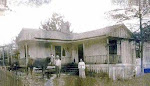
Mary Polly finished her days at the home of her youngest son, Joshua Warren Holliman (1860-1944) in Vernon Alabama, Lamar County. This writer had the privilege of talking to Joshua in the 1930s and hunting on his farm as a boy. One of the last recollections that Joshua had of his mother comes from our family archives. She was ‘sitting in a rocking chair on the front porch of an old dog-trot house, smoking a corn cob pipe, dipping snuff and nipping from a quart of Four Roses whiskey that was sitting on the floor beside her chair!” What a unique way to remember a lady whose life-long work ethic brought comfort and support to so many.

There are many tales to tell about Mary Polly Lucas Holliman and her large family. There is a separate, exciting story about each one of them. There are very few cemeteries in Fayette County where you can’t find one or more Hollimans descended from Mary Polly. Her descendants spread out over Mississippi, Oklahoma, Texas and Alabama.


Tombstone of Mary Polly Lucas Holliman


(photo courtsey of Norman Holliman)


In our next post, Dr. Rhodes Holliman continues his story of the Holliman family with a two part biography of John Thomas Holliman (1844-1930).


The Children of Uriah Holliman and Mary Polly Lucas Holliman
compiled by Dr. Rhodes Holliman

1. Mary Elizabeth Holliman, born Sept. 12th, 1837, died Oct. 9th, 1841.

2. James Franklin Holliman, born Jan. 28th, 1839, died 13 May, 1911. 1st Lt., Co. B, 58th Alabama Infantry Regt., captured at Missionary Ridge, TN, on Nov. 25th, 1863. Spent the remainder of the War in Johnson's Island Prison Camp for Confederate Officers, in Erie, Ohio. He was released on June 13th, 1865. He returned to Fayette County to become a teacher and farmer. He married Rebecca Utley Stewart on July 2nd, 1865. They had 4 children (3 boys and a girl). Rebecca died and JFH married one of his former students, Bertha Lee Powell. The had 5 children (3 boys and 2 girls). JFH and both wives are buried at the Holliman-Stewart Cemetery, Bluff, AL.

3, Sarah Jane Holliman, born Oct. 3, 1840 in Fayette County, died Oct. 15, 1915, buried at Cottonwood Cemetery, 6 miles east of Eustace, Texas. She married Charles Stephen Coppell in Fayette County on July 13th, 1864.

4. Charles Daniel Holliman, born May 6th, 1842, died May 12, 1862 of diseases mentioned above while in the Confederate Army. Burial probably in the Confederate Cemetery, Okolona, MS.

5. John Thomas Holliman, born April 23, 1844, died July 12th 1930 in Fayette County. Burial at Caine’s Ridge Cemetery, 4 miles south of Fayette, AL, on Route 159. Was known as "Hico John" to distinguish him from 2 others of the same name in the county. Married (1) Sarah Corbett: one child, William Perry. She died in childbirth. Married (2) Martha Jane Walker: 5 sons. JTH was a Pvt. in Company H. 41st Alabama Infantry Regr., CSA. He surrendered at Petersburg, VA, on Feb. 15th, 1865, near starvation. He took the oath and was paroled to a farmer in Indianapolis, Indiana, where he worked until the fall of 1865 and then walked home to Fayette County, AL.

6. Elijah Holliman, born April 16th, 1846, died July 10th, 1864, from typhoid while serving in the Confederate Army. He was a Pvt. in Company I of the 56th Alabama Partisan Rangers. He died in a Confederate Hospital near Lagrange, GA and his buried in Confederate Cemetery under gravestone that reads E. Holman.

7. Nancy Palestine Holliman, born April 7th, 1848, died Dec. 12th, 1923. Married John Pinion: no issue. She is buried near her mother, Mary Polly, in Springhill Cemetery near Bluff, AL.

8. Cornelius Holliman, born Dec. 16th, 1849, in Fayette County. Married Sarah Elizabeth Smith at Fayette. Moved to Rockdale, Milam County, Texas. Buried Texas Eagle Cemetery. This is Norman S. Holliman's great grandfather.

9. William Perry Holliman, born March 29th, 1852, in Fayette County. Married Sarah Holliman, a distant cousin and daughter of Warren C. Holliman and Mary Blakeney of Newtonville, AL. Moved to Rockdale, Milam County, Texas. Resided near Cameron, Texas.

10. Martha Ann Holliman, born June 27th, 1854, married Rufus Buckner. Resided near Alvord, Texas.

11. Rebecca Drucilla Holliman, born March 4th, 1856. Married John Thomas Holliman, cousin, and son of Warren C. Holliman and Mary Blakeney of Newtonville, AL. Moved to Ardmore, OK. He was called "Black John" due to the color of his hair and to distinguish him from two other John Ts living Fayette County at the same time.

12. Emily Frances Holliman, born March 14th, 1858 in Fayette Co. Married (1) Abner McClung in Fayette County. Moved to Eustace, Texas, where she had relatives and there married Joe Reynolds.

13. Joshua Warren Holliman, born Aug. 26th, 1860, died Jan. 6th, 1944. Married Martha Goulsby, resided in Vernon, Lamar County, AL, until his death. Buried in Vernon. His mother, Mary Polly Lucas Holliman, died at his home in 1913.