Showing posts with label Mill Swamp Baptist Church. Show all posts

Tuesday, April 5, 2016

A Holyman Gathering in Virginia

by Glenn N. Holliman

A report on the First National Gathering of the Descendants of Christopher Hollyman (1618-1691)....


They came from Washington, New Jersey, Pennsylvania, Texas, Arkansas, Tennessee, Alabama, North Carolina, South Carolina and Virginia - direct descendants of the Englishman who migrated in 1650 from Bedford, Bedfordshire to Isle of Wight, Virginia. This picture taken at the Smithfield, Virginia Hampton Inn were many stayed and sessions were held.

Christopher Holyman (or Hollyman) settled in 1661 along the Cypress River and in 1684 nestled his family in northern Isle of Wight County along the Surrey County border.  He left his four sons over 1,000 acres to be divided amongst themselves.  Direct descendants - the Barlows and Hollemans still live in the county and in southeast Virginia and provided hospitality for those who traveled back to the community where the American venture of this extended family began.

Right, Steve Holleman of South Carolina and Allen Holleman of North Carolina.

Counting spouses and significant others, over 50 individuals from March 31 to April 2, 2016 enjoyed visiting and sharing research on our various lineages.  Organized by Allen Holleman of Raleigh, North Carolina and coordinated with the great assistance of Joe Barlow and Billy Joe Holleman of Smithfield, Virginia, cousins explored early home sites of 17th century Hollymans.

Below, after first sessions and an afternoon stop at the Isle of Wight Museum (a gem of a museum), the group traveled to the original plantation of Christopher Hollyman.  Billy Joe Holleman, owner and steward of the Hollyman plantation, explained who is buried in the family cemetery adjacent to the 1830 Holleman House and other older out buildings.  After a tour of the grounds and farm, Billy Joe and his wife hosted a late afternoon 'feast' of gourmet Smithfield ham and rolls at the Mill Swamp Baptist Church fellowship hall.

Many expressed their deep feelings at being able to walk the ground where Christopher Hollyman and family had girded virgin timber, cleared the first fields, raised livestock, corn and a cash crop and thrived in the New World.  And from this place, our ancestors lived and eventually began the western movement across what became the United States of America.  

Below, Sarah Barlow Wright, whose mother was raised in the Holleman House in Mill Swamp, shared her knowledge of the 1830 colonial style residence.  On this property Hollemans have lived and continue to live since 1684.

Billy Joe Holliman even provided a 'hay wagon' to take cousins deep into the former plantation fields to share the site of the oldest cemetery known to hold the remains of ancestors. Right in red, Laurie Sherrod and in white top with black dots, Jeanette Holiman Stewart.


Below in light green, Brenda Holloman of of Wake County, North Carolina, shared her thoughts as the group gathered at the oldest cemetery located on original Hollyman land. In living memory, a house of unknown age, but old, was located near this location.  Is this then the unmarked grave of Christopher Hollyman and some of his 18th century descendants?   We may never know.  Then again, what if?


 At the Hampton Inn community room, sessions were held on our English heritage and research papers and booklets distributed by Lynn Holliman, Steve Holleman, Allen Holleman and Glenn Holliman.  Importantly consensus emerged to formally organize a Christopher Hollyman Families Historical Society with future memberships and gatherings.  Among the goals of the Society will be to conduct scholarly research and share and preserve that research and family documents and photographs.

Below center in light blue, Joe Parker, acknowledged 'dean' of Hollyman family history, donated a volume of his research to be scanned and uploaded to the family's new virtual archive at www.bholliman.com/ .


Development of a Society web site is to be explored that would link or fold into the site current assets.  These being the Yahoo Hollyman group chatroom and Hollyman Facebook page developed and administered by Tina Peddie (who can be reached at desabla1@yahoo.com) and the Hollyman Ancestry.com Tree administered by Jeanette Holiman Stewart (who can be reached at htreekeeper@outlook.com).  Other assets include two administered by this writer - http://hollimanfamilyblogspot.com/ and a virtual archive at www.bholliman.com/ .

Additional photographs of this emotional and important Gathering can be found at the Hollyman Facebook page. Photographs on this page provided by Alice Holliman Murphy of Texas.

Please continue to watch this space not only for more items of family history, but information on the emerging Christopher Hollyman Families Historical Society....

Saturday, May 3, 2014

Exploring further Holleman History in Old Virginia, Part 12

by Glenn N. Holliman

Note in previous articles, I have written of Josiah Holleman and his sons, Joel and Wilson who lived in 19th Century Isle of Wight County, Virginia.  In this posting, Allen Holleman of North Carolina writes of Jesse Holleman, the father and grandfather of the before noted Hollemans.  Allen's lineage is profiled in our October 4, 2012 article in the Archives of this blog. Take a look at Allen's blue convertible! GNH


Jesse Holleman, a Man Among Men 
by descendant Allen Holleman (photograph below)
 
Jesse Holleman (1735 ca - 1825) is a great grandson of Christopher Holyman (1618-1691), the patriarch of most of the Hollyman (various spellings) clans in America.  Christopher, Sr. arrived in Jamestown in 1650, and fathered Christopher, Jr. who parented John Holleman, the father of Jesse Holleman of this article.  All lived in Isle of Wight County, VA and had extensive land holdings in this Tidewater area of southeast Virginia. 

We don't know much about Jesse's early life other than he was born about 1735-37. His mother was named Elizabeth but we know less about her except that she was named as heir and executrix of John's will dated and applied in 1751 when John died. 

Below a Google photograph of the Holleman Farm at Mill Swamp today.  Approximately 100 acres remain of the original 1,020 acres Christopher Holyman, Sr. patented in 1684.  The Mill Swamp Cemetery land and possibly the land for the Mill Swamp Baptist Church, adjacent to the Cemetery, were donated by the Holleman family.  The Holleman House and remaining farm are located on the left center of this picture on Highway 621.


Jesse inherited 200 acres beside the Mill Swamp as a teenager, and it is safe to say he began farming the land as he grew into manhood.  He was educated well enough to read and write as he signed his name, not using an 'X'.  Also in his later professions of surveyor and land appraiser, many documents and other written works were necessary.  Even later, as a Baptist minister he needed not only to read and quote the Bible but to deal with the records and documents required.

Jesse acquired other properties and expanded his farming, mainly tobacco which leeches the soils so badly that land could be used only for a few seasons.  He, and later his sons, must have worked the farms themselves as census records show him having only one slave.  Although the slave population grew rapidly in Virginia in the 1700s, Jesse probably could not afford bonded servants in his early years.  Tobacco demands skill to raise, cure and transport, and he may have been able to hire some help among the numerous free blacks in Isle of Wight County.

What was Jesse like, what sort of man was he?  Farming demands dedication and hard work so he would have been self-directed and even driven.  By learning a new profession, he showed determination to succeed and proposer. He surely had high standards for himself and expected no less for his children.  

And they did not disappoint. A son, Josiah, became a member of the House of Delegates and a long time commissioner of Isle of Wight County.  A grandson, Joel Holleman, became a U.S. Congressman and Speaker of the House of Delegates.

The Holleman family was reasonably prosperous and prominent in the area among such neighbors as the Wombles, Gwaltneys, Burwells, Wrenns and Cofers.  And in marrying Charity Cofer (m. ca 1766), Jesse did very well indeed.  He was held in such regard that he was co-executor of her father's will along with her brother and was trusted to value the land and divide it according to the senior Thomas Cofer's wishes.

There are records of Jesse's father, John, being a land appraiser, and one wonders if John might also have been a surveyor.  Jesse had probably learned much from John, even at a young age, as children grew up quite early in colonial times.  Jesse became a highly-regarded surveyor, an exacting science even in that more "primitive" time.  Land appraisal is more of an art, but requires trust in one whose judgement and experience can be relied upon for sale or inheritance purposes.  There was little circulating money, so property and the cash crop tobacco were the basis for wealth.

Jesse and Charity had three daughters: Mary "Polly", Sarah and another whose name is lost to history.  I have read that they had twelve sons but we can only identify seven.  All the boys names started with 'J': John, Josiah, Jesse (Jr.), Jordan and Jonathan we know quite well and some about Jeremiah but nothing about Jeptha.  He might have died at a young age - as possibly others?

And none named James. It was written by early genealogists that  James Grantson Holliman (1750-1836) of North Carolina was a son of Jesse, but Joseph Parker, Maxine Wright, Jeanette Holiman Stewart and Glenn N. Holliman have demonstrated otherwise earlier at this blog site.  Charity would have been only 10-12 years old if she had birthed James Grantson, and she never lived in North Carolina as did he.

Charity was in the 1810 census and died before 1816 when Jesse married a prominent widow, Frances Dews Stringfield, when he was about 70 years old. 

And no, there were no more children, but Jesse took up another profession, that of minister of the oldest Baptist church in Virginia - Mill Swamp Baptist that is still a thriving congregation today.  There was a previous congregation that met at Burleigh Plantation, but this group never had a building per se.  MSBC grew from this first Virginia attempt at organized Baptist worship. When he was in his 80's, Jesse again served the church as minister.  Below, Mill Swamp Baptist Church as it looks in the 21st Century.


And what might seem strange today....Jesse was also a distiller of spirits.  It was common practice to have a toddy before dinner, and Jesse, who evidently had no use for temperance, made apple brandy, his favorite.  It probably helped him live longer and surely made the journey more enjoyable.  My how the Baptists have changed!

Many researchers have stated that Jesse was a patriot in the American Revolution (true) - as a soldier in the army. That part is not accurate.  He would have been about 40 and too old for field service - except maybe as a senior officer and the records would exist for that. 

No, he had a large farm and family to look after as well as his other professions. As all able-bodied men were expected to serve in the local militia, Jesse might have served there, probably along with his teen-aged sons.

 Alas, when the British officer, Banister "Bloody" Tarleton, burned the Isle of Wight courthouse, many of the militia records were lost along with many other documents. (This is why we have lost so much information on our antecedents.)

Jesse did something equally important as being a soldier.  In 1779 he was appointed Surveyor of Roads for Isle of Wight county, building and maintaining roads used by the citizens, militia and army. Unfortunately the area roads were utilized by the British as well, who made excursions into the region burning, pillaging and thieving, before being driven back to their ships by the militia. 

This service is the important basis for a number of DAR and SAR applications - including my own.  Jesse Holleman was truly ‘A Man Among Men’.

Jesse died in December of 1824, and his will was proved with an inventory on January 3, 1825.  It has long been written that he was buried in the Mill Swamp Baptist church cemetery, but that land was not given until later.  It is almost certain that Jesse was laid to rest in the existing cemetery on the Holleman farm, possibly with John, and Christophers Sr. and Jr.  Wooden markers of the time did not last long, and Wilson's is the earliest carved in stone. - Allen Holleman of North Carolina


  I am grateful to Allen for this article, and encourage all who have an ancestral story to send it along so we may share it with others. GNH

Next posting...back to our English Roots, some new research....

Have questions about Holliman family history? You are invited to join the Hollyman Email List at Hollyman-Subscribe@yahoogroups.com and the Hollyman Family Facebook Page located on Facebook at "Hollyman Family". Post your questions and perhaps one of the dozens Holyman cousins on the list will have an answer. For more information contact Tina Peddie at desabla1@yahoo.com, the list and Facebook manager for Hollyman (and all our various spellings!).

Join your many cousins at MyFamily.com and view an expanded Holliman family tree and many files on the history of the family.  Just write to glennhistory@gmail.com for an invitation. Or go to the HOLLYMAN GENEALOGY MyFamily site at http://myfamily.com/group/hollyman. Then click on "Request to Join" in upper righthand corner!

Monday, February 10, 2014

Exploring further Holleman History in Old Virginia, Part 8


by Glenn N. Holliman

This continues the stories of Hollemans who remained in the Isle of Wight County, Virginia from the time of Christopher Holyman's acquisition of land in 1661 to the present day.  The historical interpretation is the writer's alone as are any errors of fact or omission.  Critique and comment welcome.

As has been written, the founder of most Holleman (Holliman, etc) offspring in the United States can be traced to English immigrant Christopher Holyman (1618-1691), who in 1684 patented 1,020 acres along the Blackwater River adjacent to Surry County.  As the decades and centuries slipped by, descendants spread throughout (mainly) the southern and southwestern colonies (later states) and by the post World War II era, throughout the United States. 

As we have noted in previous articles, in 1830, descendant Wilson Holleman (1803 - 1873) constructed a large Federal period house on some of the original Holyman land.  This era represented a time of both economic and political prosperity for this branch of Hollemans.  Although, not a 'great planter' (defined as owning more than 20 slaves), Wilson was one of the wealthiest persons in the Eastern District, the Mill Swamp area, of Isle of Wight County.  His brother, Joel Holleman (1799 - 1844), was a rising politician, and would serve in the U.S. House of Representatives.  Joel built his career on that of their father, Josiah Holleman (1771-1848), a commissioner, state representative and, for a while, the sheriff of the county.

 Let us step back to the birth of Wilson and Joel's father, Josiah Holleman (1771-1848), a son of Jesse (1735-1825) and Charity Cofer (1748-1810).  The Cofers were and remain a prominent name in Isle of Wight County.  A Revolutionary War veteran, Jesse was a great, great grandson of Christopher Holyman and a founder of the Mill Swamp Baptist Church, reportedly the first Baptist Church in Virginia.  Christopher Holyman had arrived in Virginia as an Anglican (Episcopalian), but the First Great Awakening, an emotional religious revival of the 18th Century, led many persons to create and join fledgling Baptist congregations. 

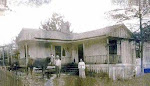
Below, Mill Swamp Baptist Church, ca 1910, Isle of Wight, Virginia. From the Isle of Wight Museum.
 When Josiah was born in 1771, Virginia was a colony of Great Britain, and the Appalachian Mountains were the western boundaries of the southern colonies.  At his death, the United States stretched from the Atlantic to the Pacific Ocean, and California was about to become a state (1850).  The changes which occurred by the end of Josiah's life were immense as the young nation both expanded, fought wars with England, Mexico and Native Americans and attempted to maintain a fragile federal union. 

During his life, Josiah Holleman, a planter and slave holder, would serve as jailer of Isle of Wight County, a member of the Virginia House of Delegates, county sheriff and until his death, often served as a commissioner (justice of the peace).  Through his political work, he left a paper trail that offer insights into the South's 'Peculiar Institution', human slavery.   

When we examine both his legal records and the Federal Censuses of the antebellum Isle of Wight County, a picture emerges of a conflicted and fearful society.  The story is quite different than that of Margaret Mitchell's 1930s popular and highly romanticized "Gone With the Wind" which portrayed only wealthy planters and docile, contented slaves.

As evidence of this restless and anxious society, one only has to look to the bordering county of Southampton, Virginia.  In 1831, the greatest fear of whites slaveholders occurred when Nat Turner, a young black slave, roused a band of fellow slaves, attacked their masters in the dead of night and eventually murdered 55 whites.  Before the rebellion was put down, over 200 blacks were killed.  This was the most violent uprising of North American slaves in U.S. history, and news of this white nightmare come true, swept the South.  Source: "The Fire of Jubilee" by Stephen B. Oates, New York, Harper and Row, 1975.  There are many books on this rebellion.

Of course, the reverberations were felt strongly in adjoining counties such as Isle of Wight, the site of Holleman plantations.  


 Isle of Wight County Virginia boarders the James River and several counties, one being Southampton County where the Nat Turner Rebellion occurred.  The historic Holyman patent of land lies on the Blackwater River, approximately where the 'I' is in Isle of Wight on this map.

African slavery began in Virginia in 1619, just a few miles from Isle of Wight County, when the first European ship deposited its human cargo at Jamestown.  As former Secretary of State, Condoleezza Rice, herself descended from slaves, has written, 'American's birth defect' had grasped the colonies.  By 1793 and invention of the cotton gin, African-American slavery accelerated its march across the fertile fields of the southern United States. 

As Oates observed, slavery, while more and more a perceived economic necessary by the early 1800s, was also 'a family heirloom left by some sadistic relative'.  And that inheritance ate away at the soul and unity of the nation, conflicting many whites and leading to a fearful and racially authoritative culture in the South.  Half slave and half free, the union dissolved in 1861 into a bitter, deadly Civil War.

In our next postings, through the careers and lives of these Isle of Wight Hollemans, we will see elements of that fear played out in vivid detail. 

Have questions about Holliman family history? You are invited to join the Hollyman Email List at Hollyman-Subscribe@yahoogroups.com and the Hollyman Family Facebook Page located on Facebook at "Hollyman Family". Post your questions and perhaps one of the dozens Holyman cousins on the list will have an answer. For more information contact Tina Peddie at desabla1@yahoo.com, the list and Facebook manager for Hollyman (and all our various spellings!).

Join your many cousins at MyFamily.com and view an expanded Holliman family tree and many files on the history of the family.  Just write to glennhistory@gmail.com for an invitation. Or go to the HOLLYMAN GENEALOGY MyFamily site at http://myfamily.com/group/hollyman. Then click on "Request to Join" in upper righthand corner!