Showing posts with label James Franklin Holliman. Show all posts

Friday, March 9, 2012

A Holliman History by Walter O. Holliman, Part VIII

by Glenn N. Holliman


This is the eighth in a series of a history of the Holliman family written by Walter O. Holliman in 1995 and edited in 1996.


The John Thomas Holliman recorded in these documents is this writer's great grandfather.

Wednesday, July 20, 2011

The Hollimans of Alabama

by Glenn N. Holliman

Back to the 19th Century...A Series of Articles on the Hollimans and Related Families of Fayette County, Alabama

One of the more unusual stops on our April 9th, 2011 excursion was a visit to memorial for some Hollimans who fought in the Civil War.  While not a burial spot, a well-meaning distant cousin ordered and set up near the William Bailey Holliman home a series of memorial stones honoring James Franklin Holliman, John Thomas Holliman, Uriah Holliman and Elijah Holliman.  


Future generations, please be aware many of the dates are incorrect and some facts are wrong on the stones.
Surveying the memorial stones are left to right, Joey Holliman, Tommie Holliman Allen, Faye Gardner, Jeanette Holliman and Tyler Duckworth.  A front view of the stones reveals an old barn in a collapsed state in the background.  Pictured below are Bill Holliman and Robert Holliman.


The date on John T. Holliman's stone is incorrect.  He died in 1930.  While these are not grave sites, one notes that several of these persons did not come home.  Elijah Holliman died not at  Petersburg, Virginia, but rather at La Grange, Georgia of typhoid fever. He is buried there having served with the 56th Alabama Partisan Rangers.  Uriah Holliman died in Okalona, Mississippi along with his son, Charles Daniel Holliman.


                                                                James F. Holliman is NOT buried in this plot but in the Stewart-Holliman Cemetery.
                                                                  Uriah Holliman was born on July 6, 1816, in Lancaster County, SC. He married Mary "Polly" Lucas in
Tuscaloosa County, AL on Aug. 31, 1836. Performing the ceremony was the Rev. John Walters. Mary was 17 years old. The couple later settled southwest of Bluff in Fayette County, where government land records show that Uriah received patents for more than 320 acres in the late 1850s. Uriah joined the Confederate Army in 1861 at the age of 45! He was Pvt. Uriah H. Holliman, Co. B of the 9th Alabama
Battalion of Volunteers, 26th Regiment, CSA.

He died of measles and pneumonia at Okolona, Chickasaw County, MS, on May 8, 1862, attended by his wife until death. Their son, Charles Daniel Holliman, same military unit, same place, died on May 12, 1862, of the same diseases. Their grave sites are unknown but probably in the Confederate Cemetery in Okolona, MS. Fayette County, Alabama. - Information provided by Dr. Rhodes Holliman, great, great grandson of Uriah Holliman.


I leave this blog up as a caution to those who stumble on the stones near Bluff, Alabama sometime in the future.  They are not accurate.

Plan now to attend the Holliman and Associated Families Genealogical Round Table at the Fayette County, Alabama Civic Center, 10 am to 3 pm, Saturday, October 15, 2011. For information and reservations for lunch, contact Glenda Norris at gnorris@bcbsal.org or Glenn Holliman at Glennhistory@gmail.com.  Sessions to include Tracing the Holymans from England to Alabama, Holliman Farm Sites in Fayette County and sharing of information on Associated Families.  All invited!


More Holliman sites of Fayette County in the next post.

Saturday, July 16, 2011

The Hollimans of Alabama

by Glenn N. Holliman

Back to the 19th Century...A Series of Articles on the Hollimans and Related Families of Fayette County, Alabama


Frank Holliman shares information with Bill Holliman, left, and Bill's Uncle Bishop Holliman at the Holliman-Stewart Cemetery in the Bluff Community of Fayette County, Alabama.


Pictured is the gravestone of Frank Holliman's grandfather, William Bailey Holliman, a son of James Franklin Holliman and Rebecca Stewart Holliman.


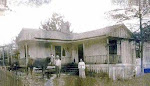
Right, located near the Holliman-Stewart Cemetery is the old home of William Baily Holliman, a classic early 19th Century 'dog-trot'.  The name originated as the family dogs would sleep or trot through the opening between the two sides of the cabin.  Generally one side was built to hold the kitchen with its wood stove (not comfortable in the summer) and the living rooms on the other side.  Of course, no running water, central heat or air, or electricity.  Those were the good ole days?

Plan now to attend the Holliman and Associated Families Genealogical Round Table at the Fayette County, Alabama Civic Center, 10 am to 3 pm, Saturday, October 15, 2011. For information and reservations for lunch, contact Glenda Norris at gnorris@bcbsal.org or Glenn Holliman at Glennhistory@gmail.com.  Sessions to include Tracing the Holymans from England to Alabama, Holliman Farm Sites in Fayette County and sharing of information on Associated Families.  All invited!

Tuesday, June 28, 2011

The Hollimans of Alabama

by Glenn N. Holliman

Back to the 19th Century...A Series of Articles on the Hollimans and Related Families of Fayette County, Alabama

Visiting the Grave site of James Franklin Holliman, An Officer and a Teacher

Below the 21st Century James Franklin Holliman stands by the grave of his great grandfather, James Franklin (1839  - 1908) and his great grandmother, Bertha Lee Holliman. James Franklin Holliman's first wife, Rebecca Stewart,  the one to whom he wrote a series of letters during the Civil War, lies on the other side of his grave.  The location is the Steward-Holliman Cemetery near the Bluff community.


Below Robert Holliman, a great great grandson of Uriah and Polly Lucas Holliman clears brush near the grave site of his great, great uncle, James Franklin Holliman at the Stewart-Holliman Cemetery.

Lt. James Franklin Holliman of the Alabama 58th Regiment, Co. B, was captured at Missionary Ridge, Tennessee.  After incarceration for two years at the infamous Johnson's Island in Lake Erie, Ohio, on June 13, 1865, he was released, and walked home to Alabama,  At home he did some thing even more heroic - he started a school in his own community and devoted his life to educating the citizens of northern Fayette County.  The school was located a few miles from his grave site in the Bluff community.  This information courtesy of Rhodes Holliman.

More on this Cemetery in the next post....


Plan now to attend the Holliman and Associated Families Genealogical Round Table at the Fayette County, Alabama Civic Center, 10 am to 3 pm, Saturday, October 15, 2011. For information and reservations for lunch, contact Glenda Norris at gnorris@bcbsal.org or Glenn Holliman at Glennhistory@gmail.com.  Sessions to include Tracing the Holymans from England to Alabama, Holliman Farm Sites in Fayette County and sharing of information on Associated Families.  All invited!

Tuesday, June 21, 2011

The Hollimans of Alabama

by Glenn N. Holliman

Back to the 19th Century...A Series of Articles on the Hollimans and Related Families of Fayette County, Alabama


 Nancy Palestine Holliman, one of the thirteen children of Uriah and Polly Lucas Holliman, is buried at Springhill Cemetery in the Bluff Community of Fayette County, Alabama near her mother, Mary Polly Lucas Holliman.  Athough her name is listed as Holliman on the stone, Nancy Palestine is reported by Rhodes Holliman to have been married to John Pinion, but they had no children.


Below, J. Frank Holliman, a second great grandson of Uriah and Polly Lucas Holliman, tells the tale of the winter time burial of his great aunt, Palestine, at the Bluff community, Spring Hill Cemetery.  His great grandfather and other relatives dug the grave on a cold, stormy night in 1923.

Left to right are Bill Holliman, Bishop Holliman, Norman Holliman, James Franklin (Frank) Holliman, Glenda Norris, Wally and Tommie Holliman Allen.  Frank Holliman, who still lives on and near the land farmed by Uriah Holliman prior to the Civil War, is most familiar with Holliman ancestors in the northern part of Fayette County and southern part of Lamar County, Alabama.  This excursion to north central Alabama on April 9, 2011 was organized by Uriah and Polly Lucas Holliman's 3rd great grand daughter, Glenda Norris.

More next post on the Hollimans of Fayette County....


Plan now to attend the Holliman and Associated Families Genealogical Round Table at the Fayette County, Alabama Civic Center, 10 am to 3 pm, Saturday, October 15, 2011. For information and reservations for lunch, contact Glenda Norris at gnorris@bcbsal.org or Glenn Holliman at Glennhistory@gmail.com.  Sessions to include Tracing the Holymans from England to Alabama, Holliman Farm Sites in Fayette County and sharing of information on Associated Families.  All invited!

Friday, April 2, 2010

The Confederate Soldier Who Became a Teacher, Part II

This is the second part of Rhodes Holliman's story of James Franklin Holliman (photo below, ca. 1900). James Franklin returned from the Civil War and devoted himself to school teaching and educating a new generation. He also fathered nine children with two wives. Scattered throughout western and northern Alabama are many descendants of this dynamic ancestor!

A SOUTHERN FARM BOY
AND A GALLANT LOVER
by Dr. Rhodes B. Holliman of Dublin, Virginia,
his great great nephew. First published in Southern Times, Magazine of Tuscaloosa and West Alabama, Issue 130.

He (James Franklin Holliman) returned to Bluff Community in Fayette County, AL, to resume farming and became the local school teacher. He had a large number of relatives on his class rolls including his brothers and sisters. He married Rebecca Utley Stewart, his wartime sweetheart, on July 2nd, 1865.

Her birth date remains in contention. Her ornate grave marker says: "Nov. 26, 1829". Other sources of family information say: "Oct. 6, 1839", but it is generally conceded that Rebecca was older than James - if her grave marker is correct, she was 10 years older. This disparity in their ages would be unusual for that era and place. Men of that time usually married women who were younger.

A love letter written by him at some time during the War is reputed to be his proposal of marriage. It shows a remarkable expression of sensitivity considering that it was composed by a self-taught, back-woods, farm boy whose parents and siblings were mostly illiterate.

“Miss, for the first time I undertake the pleasant task of addressing you by letter with feelings that you can better imagine than I can describe; to attempt to describe the feelings that pervaded my bosom the last time I had the pleasure of your company would be useless. They would baffel (sic) all descriptions; neither could I at that time, owing to the intensity of my feelings, express them, but my pen obeys the impuls (sic) of my heart, and I can with pleasure in this way communicate (sic) my thoughts and the tender sentiments of my soul to her I love, to her I adore.

It affords me unaffected pleasure to hold correspondence with one so pure, so inicent (sic), so lovely, and you will reseive (sic) thes (sic) lines as a token of the love of one whos (sic) heart you posess (sic), one who from the first moment in which he beheld you has never ceast (sic) to love you with all the tenderness that the human heart is capable of feeling. I, who never can enjoy life except in your society; what would all the world be to me without you to share its pleasures, a caotic (sic) nothing.

Often does my imagination fly to where you are and hover around you and fancy that I see your beautiful form and the angel like beauty and simplicity that is continually beaming from your face. O (sic) when shall my fondest hopes of hapiness (sic) be realized ? When shall I press you to my heart, and call you mine, my one, my lovely. Then would I in the language of the poets, be content and blest whenever I hear the voice of her I love.

Love, that word is full of meaning to me. Could I express that devotion of heart and soul, that enables both lover and love, that undying impulse of attachment that rules my breast; that union of thought, feeling and existence, by which two persons are bound together, that lasts for life and never knows ending; but language fails, and I alone can fel (sic), and you can realize the extent of what cant (sic) be expressed lovely girl. These are of one who will ever remain your faithful lover.”

Rebecca (“Becca”) bore him 4 children: 3 boys and a girl. She died on November 2nd, 1883. An exhaustive search for a picture of her has yielded nothing.

He remained single until he was 57 years old (1896) whereupon he married a former student, Bertha Lee Powell, who was 18 years old! She bore him 5 children: 3 boys, 2 girls. He was 67 years old when his last child was born. He died on May 13,1911. Bertha Lee assumed the roll of head of household and reared her brood to be responsible and productive citizens.

In James' Last Will and Testament dated September 16, 1910, he bequeathed 40 acres of farm land to each of his children by Rebecca and Bertha Lee and he appointed Bertha Lee as his executrix and guardian of his children. He bequeathed to her 20 acres of choice land all of his personal property.

His cause of death, as listed on the Alabama Death Certificate, was "softing of the brain." The duration of his terminal illness was listed as "8 months." The accuracy of medical diagnostics in rural Fayette County in 1911 was profoundly primitive!


The above photo is of Bertha Lee Powell Holliman and her third child, Janet, b 1903 and who passed away in 2002. Bertha Lee died March 21, 1948. Photos on this post courtesy of Dr. Holliman.
The last of Bertha's children to die was Janet, who, in 2002, had survived for 99 years and 10 months. He, both wives, and a number of his offspring and in-laws are buried in the Holliman-Stewart Cemetery just south of the Bluff Community in northern Fayette County, AL. The ruins of his old homestead have been recently discovered just south of the family cemetery and isolated from any current or historic road bed.

Friday, March 26, 2010

The Confederate Soldier Who Became a Teacher

In this post we focus on another of Mary Polly Holliman's sons, James Franklin, who survived the Civil War and returned home to become a school teacher. Unfortunately for Polly and her remaining children, her husband, Uriah, and two other sons, Charles Daniel and Elijah, died while serving in the Confederate Army. Imagine the heartache and worry of Polly both during and after the devastating war.

Our continued thanks to cousin Rhodes Holliman for his permission to share these amazing stories and photographs of our ancestors.

The photo is James Franklin Holliman in his Confederate uniform, ca. 1863.


A SOUTHERN FARM BOY AND A GALLANT LOVER

by Dr. Rhodes B. Holliman of Dublin, Virginia,
his great great nephew. First published in Southern Times, Magazine of Tuscaloosa and West Alabama, Issue 130.

James Franklin Holliman was the second of 13 children born to Uriah Holliman and Mary Polly Lucas Holliman. She delivered her entire brood by herself, 7 boys and 6 girls. James was born in Tuscaloosa County, Alabama, on January 28th, 1839, but Uriah soon moved the family north into Fayette County, AL, where he obtained Federal homestead land for farming.

When the clouds of War covered the South, a wave of patriotic enthusiasm swept over the family and the father, Uriah, now 46 years old, 4 of his 7 sons, and one son-in-law joined the Confederate Army. The War would exact a heavy toll on this family: of the 6 who enlisted, only 3 would survive.

James enlisted for a year as a private in the 9th Alabama Battalion, Company B, in Fayette, Alabama, in September, 1861. In the following spring, the 9th Battalion proceeded to Corinth, MS, and was engaged at Shiloh and Farmington. At Blackland, MS, the Battalion lost about 20 killed and wounded and disease took its toll at Shiloh, Corinth and Okolona, MS. Among those dying at Okolona was James’ father, Uriah (May 8, 1862), and a brother, Charles Daniel (May 12, 1862).

James reenlisted in the 9th Battalion in September, 1862, as a 1st Lieut., and was sent to Mobile, AL, remaining there until April, 1863. At that time, the Battalion proceeded to Tullahoma, TN, and was placed in Gen. Henry D. Clayton’s Brigade. This set the stage for the carnage that would follow in the area around Chattanooga, TN. The 9th was in several small engagements, especially at Hoover’s Gap. In July, 1863, at Tullahoma, 2 additional companies were attached and the 58th Alabama Infantry Regiment was formed. The 58th was in the thick of the fighting at the Battle of Chickamauga in September 19 - 20. On the 19th, the 58th captured 4 pieces of artillery, and on the 20th, in a suicidal charge, they broke the enemy line with the loss of 148 out of 254 men. A few weeks later in November, the 58th was consolidated with the 32nd Alabama and the field officers of the 58th were retained.

The consolidated Regiment had 400 present at Missionary Ridge on Nov. 25th, 1863, but lost 250 in casualties and prisoners. Lieut. James F. Holliman was captured on November 25th. He was shipped to a military prison in Louisville, KY, and thence to the infamous prison for Confederate officers at Johnson’s Island, Lake Erie, near Sandusky, Ohio. There he remained until he was paroled and took the Oath of Allegiance on June 13th, 1865. He was then described as being 26 years of age, dark completion, dark hair, gray eyes, 5 feet, 9 inches tall.

In our next weblog, we share the second half of James Franklin's life along with a beautiful love letter sent to his fiancée, Rebecca.