



 Posts
Posts


by Glenn N. Holliman
This continues the
stories of Hollemans who remained in the Isle of Wight County, Virginia from
the time of Christopher Holyman's acquisition of land in 1661 to the present
day. The historical interpretation is the writer's alone as are any errors
of fact or omission. Critique and
comment welcome.
As has been written, the founder of most Holleman
(Holliman, etc) offspring in the United States can be traced to English
immigrant Christopher Holyman (1618-1691),
who in 1684 patented 1,020 acres along the Blackwater River adjacent to Surry
County. As the decades and centuries
slipped by, descendants spread throughout (mainly) the southern and
southwestern colonies (later states) and by the post World War II era,
throughout the United States.
As we have noted in previous
articles, in 1830, descendant Wilson
Holleman (1803 - 1873) constructed a large Federal period house on some of
the original Holyman land. This era represented a time of both
economic and political prosperity for this branch of Hollemans. Although, not a 'great planter' (defined as owning more than 20 slaves), Wilson
was one of the wealthiest persons in the Eastern District, the Mill Swamp area,
of Isle of Wight County. His brother, Joel Holleman (1799 - 1844), was a
rising politician, and would serve in the U.S. House of Representatives. Joel built his career on that of their
father, Josiah Holleman (1771-1848),
a commissioner, state representative and, for a while, the sheriff of the
county.
Let us step back to
the birth of Wilson and Joel's father, Josiah
Holleman (1771-1848), a son of Jesse
(1735-1825) and Charity Cofer
(1748-1810). The Cofers were and remain
a prominent name in Isle of Wight County.
A Revolutionary War veteran, Jesse was a great, great grandson of
Christopher Holyman and a founder of the Mill Swamp Baptist Church, reportedly
the first Baptist Church in Virginia.
Christopher Holyman had arrived in Virginia as an Anglican
(Episcopalian), but the First Great Awakening, an emotional religious revival
of the 18th Century, led many persons to create and join fledgling Baptist
congregations.
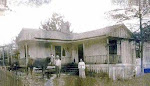
Below, Mill Swamp Baptist Church, ca 1910,
Isle of Wight, Virginia. From the Isle of Wight Museum.

When Josiah was born in 1771, Virginia was a colony of
Great Britain, and the Appalachian Mountains were the western boundaries of the
southern colonies. At his death, the
United States stretched from the Atlantic to the Pacific Ocean, and California
was about to become a state (1850). The
changes which occurred by the end of Josiah's life were immense as the young
nation both expanded, fought wars with England, Mexico and Native Americans and
attempted to maintain a fragile federal union.
During his life, Josiah Holleman, a planter and slave holder, would
serve as jailer of Isle of Wight County, a member of the Virginia House of
Delegates, county sheriff and until his death, often served as a commissioner
(justice of the peace). Through his political
work, he left a paper trail that offer insights into the South's 'Peculiar
Institution', human slavery.
When we
examine both his legal records and the Federal Censuses of the antebellum Isle
of Wight County, a picture emerges of a conflicted and fearful
society. The story is quite different than
that of Margaret Mitchell's 1930s popular and highly romanticized "Gone
With the Wind" which portrayed only wealthy planters and docile, contented
slaves.
 As evidence of this restless and anxious society, one
only has to look to the bordering county of Southampton, Virginia. In 1831, the greatest fear of whites
slaveholders occurred when Nat Turner, a young black slave, roused a band of
fellow slaves, attacked their masters in the dead of night and eventually
murdered 55 whites. Before the rebellion
was put down, over 200 blacks were killed.
This was the most violent uprising of North American slaves in U.S. history,
and news of this white nightmare come true, swept the South. Source: "The Fire of Jubilee" by Stephen B.
Oates, New York, Harper and Row, 1975.
There are many books on this rebellion.
As evidence of this restless and anxious society, one
only has to look to the bordering county of Southampton, Virginia. In 1831, the greatest fear of whites
slaveholders occurred when Nat Turner, a young black slave, roused a band of
fellow slaves, attacked their masters in the dead of night and eventually
murdered 55 whites. Before the rebellion
was put down, over 200 blacks were killed.
This was the most violent uprising of North American slaves in U.S. history,
and news of this white nightmare come true, swept the South. Source: "The Fire of Jubilee" by Stephen B.
Oates, New York, Harper and Row, 1975.
There are many books on this rebellion.
Of course, the reverberations were felt strongly in
adjoining counties such as Isle of Wight, the site of Holleman plantations.

Isle of Wight County Virginia boarders the James River and several counties, one being Southampton County where the Nat Turner Rebellion occurred. The historic Holyman patent of land lies on the Blackwater River, approximately where the 'I' is in Isle of Wight on this map.
African slavery began in
Virginia in 1619, just a few
miles from Isle of Wight County, when the first European ship deposited its
human cargo at Jamestown. As former
Secretary of State, Condoleezza Rice, herself descended from slaves, has
written, 'American's birth defect' had grasped the colonies. By 1793 and invention of the cotton gin,
African-American slavery accelerated its march across the fertile
fields of the southern United States.
As Oates observed, slavery, while more and more a perceived economic necessary by the
early 1800s, was also 'a family heirloom left by some sadistic relative'. And
that inheritance ate away at the soul and unity of the nation, conflicting many
whites and leading to a fearful and racially authoritative culture in the South.
Half slave and half free, the union
dissolved in 1861 into a bitter, deadly Civil War.
In our next postings, through the careers and lives of
these Isle of Wight Hollemans, we will see elements of that fear played out in
vivid detail.
Have
questions about Holliman family history? You are invited to join the
Hollyman Email List at Hollyman-Subscribe@yahoogroups.com and the
Hollyman Family Facebook Page located on Facebook at "Hollyman Family".
Post your questions and perhaps one of the dozens Holyman cousins on the
list will have an answer. For more information contact Tina Peddie at
desabla1@yahoo.com, the list and Facebook manager for Hollyman (and all
our various spellings!).
Join your many cousins at MyFamily.com and view an expanded Holliman family tree and many files on the history of the family. Just write to glennhistory@gmail.com for an invitation. Or go to the HOLLYMAN GENEALOGY MyFamily site at http://myfamily.com/group/
Join your many cousins at MyFamily.com and view an expanded Holliman family tree and many files on the history of the family. Just write to glennhistory@gmail.com for an invitation. Or go to the HOLLYMAN GENEALOGY MyFamily site at http://myfamily.com/group/


